Brand & Design for Hospitality, Food & Drink — The Practitioner’s Playbook.
A focused playbook for Hospitality, Food & Drink operators running Brand & Design. Static PDF menus, broken booking widgets and zero structured data are still the default in hospitality — and the result is leaked "near me" search every weekend. Private hire, corporate and group bookings are the highest-margin lines but the most under-served by typical marketing.
Brand & Design for Hospitality, Food & Drink is its own discipline.
Six things this playbook covers, end to end.
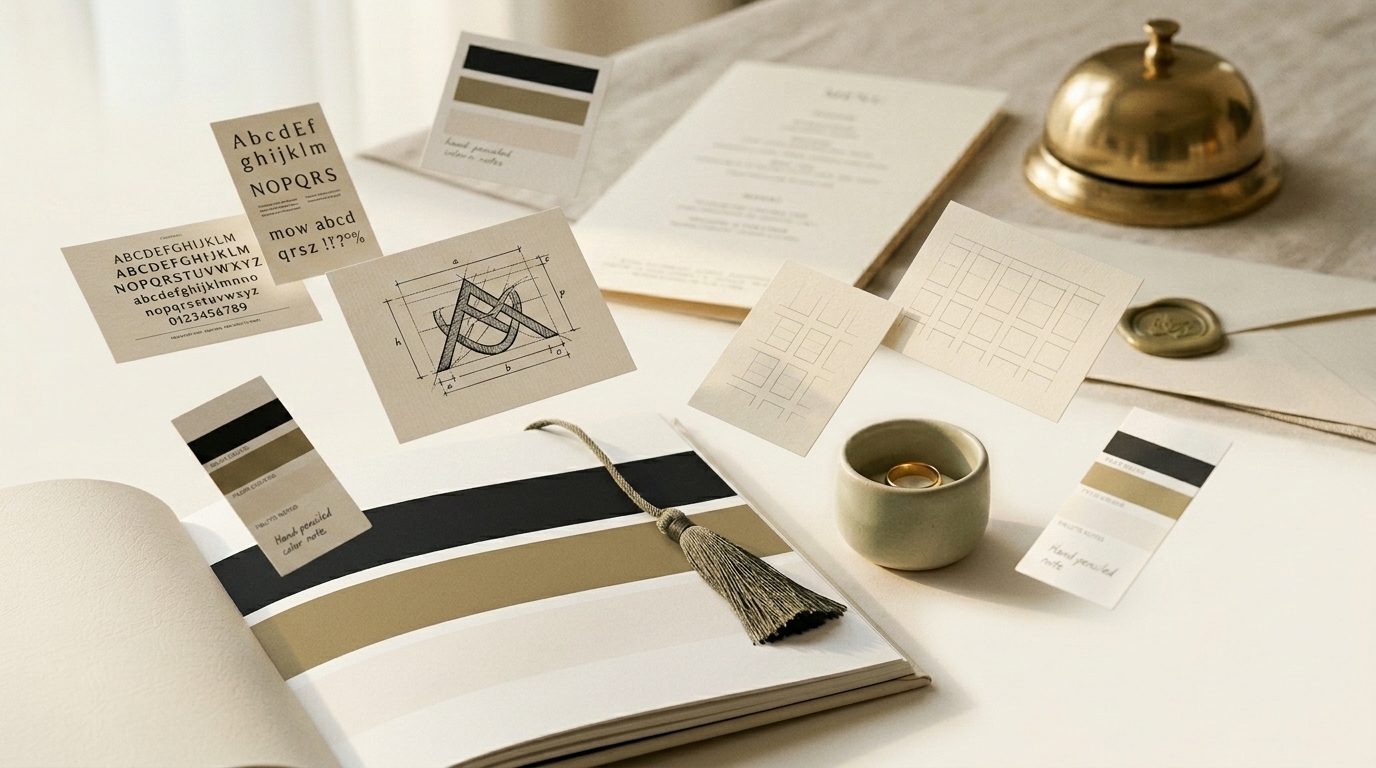
Full brand book (logo, type, colour, voice, photography)
Tuned to Hospitality, Food & Drink — the version we ship to operators in this vertical.
Logo system with mark variations and sub-brand variants
Tuned to Hospitality, Food & Drink — the version we ship to operators in this vertical.
Type pairings, scale and usage rules
Tuned to Hospitality, Food & Drink — the version we ship to operators in this vertical.
Component tokens (colour, type, spacing) for design + dev
Tuned to Hospitality, Food & Drink — the version we ship to operators in this vertical.
Marketing collateral kit (decks, brochures, signage)
Tuned to Hospitality, Food & Drink — the version we ship to operators in this vertical.
Photography brief with shot list and art-direction notes
Tuned to Hospitality, Food & Drink — the version we ship to operators in this vertical.
SectionThe honest reframe most agencies won't tell you
Most agencies sell restaurants, cafes and gastropubs a Canva-tier rebrand for two grand and call it brand work. New typeface, slightly nicer logo, a few stock shots of a burger that was photographed in a studio in Warsaw, and a colour palette borrowed from whichever Soho House the founder ate at last month. Then the same agency bills the same again next year when the menu changes. It is not brand work. It is decoration with a markup.
Hospitality, food and drink is a sensory, FSA-regulated, tight-margin category where the buyer decides whether to walk in based on the shopfront, decides whether to stay based on the menu they pick up at the table, decides whether to come back based on how the food looked when it landed, and decides whether to recommend based on how the takeaway box held up in the back of an Uber. None of those moments are decoration. All of them are conversion.
What most operators are missing is not a logo. It is food and drink photography that makes the dish look the way it actually tastes, menu typography and layout that walks a guest from greeting to dessert without them squinting, in-venue signage and wayfinding that handles toilets and allergens without a member of staff being asked, takeaway and catering packaging that survives a 20-minute moped ride, supplier-collaboration assets the brewery or the coffee roaster is happy to put on their own grid, and Natasha's Law-aware allergen visuals that pass an EHO inspection on a wet Tuesday. That is the real brand system.
This playbook fixes the structure. Read it, run it yourself, or have us ship it on retainer.
SectionThe eight-point audit we run on day one
Score your own brand system red / amber / green this week.
- Food and drink photography standards (lighting, angle, styling) — A documented photography standard covering shot list (hero dish, bestsellers, cocktails, pints, brunch plates, dessert), lighting protocol (natural daylight at 11am vs. tungsten warm at 7pm, never mixed), camera angle conventions (45 degrees for plated, overhead for boards and bowls, three-quarter for stacked builds), styling rules (no wilting garnish, glass rim wiped, no thumbprints on plate edges), and post-production limits (no contrast that turns the steak purple). Most operators are running four different photographers' work, three different white balances, and one cousin with an iPhone, all on the same Instagram grid. The buyer reads it as inconsistency and assumes the kitchen is the same.
- Menu typography and layout architecture (HTML and print) — A menu system that works on the printed card on the table, the laminated takeaway sheet at the till, the website food menu page, the QR-code menu the FSA forced you to deploy in 2020 and never updated, and the third-party delivery platform tile. Hierarchy that walks the guest from sections to dishes to descriptions to allergens to price without making them work for it. Type sizes legible by a 60-year-old in candle-light. Most menus are crowded, mistyped, inconsistent between the printed and the digital version, and have not been audited against actual reading conditions in the venue.
- In-venue signage and wayfinding system — Front-of-shop signage (open hours, allergens-on-request notice, FSA hygiene rating displayed at the entrance per Food Hygiene Rating Scheme guidance for Wales / Northern Ireland and best-practice for England), interior wayfinding (toilets, baby change, accessibility, fire exit, bar / counter / order point, table numbers), back-of-house signage (handwash points, cleaning rotas, allergen station). One coherent visual system, not nine A4 prints stuck up with masking tape over six years.
- Takeaway and catering packaging design — Branded boxes, cups, sleeves, sticker seals, paper bags, catering trays, tamper-evident labels. Designed for the way the food actually travels: pizza boxes that do not collapse the topping, soup pots that do not weep through the sleeve, cake boxes that survive a wedding car. The packaging is the brand at home, in the office, on the train, in the photo the customer puts on their feed. A neglected channel is a neglected brand.
- Supplier-collaboration brand-presence guidelines — A short, written guidelines document you can hand to the brewery whose cask you sell, the coffee roaster you list on the chalkboard, the local bakery whose sourdough you serve, the butcher whose name you put on the menu. Logo lockup, photo conventions, social handle, hashtag, line of approved copy. Suppliers love it because it makes their grid easier; you get reliable, on-brand cross-promotion instead of a low-resolution screenshot of your sign.
- FSA and allergen visual compliance (Natasha's Law-aware) — Allergen disclosure visuals that meet Natasha's Law (Pre-packed for Direct Sale labelling) where applicable, the 14 statutory allergens listed against every dish in a consistent visual treatment across menu, website, QR menu and takeaway label, and an FSA Food Hygiene Rating display strategy at the entrance and on the website. Most operators are technically out of step, visually inconsistent, or both.
- Brand voice and tone documented for venue and service style — Written voice guidelines that distinguish a 14th-century coaching-inn gastropub from a railway-arch craft-beer taproom from a third-wave specialty coffee shop from a 60-cover hotel restaurant. Words you use, words you do not, how the menu copy reads, how the welcome at the door sounds, how the email confirmation lands, how the apology for a slow kitchen is worded. Most operators have nothing in writing — every member of staff and every freelance copywriter reinvents the brand at random.
- Production-asset library on a managed digital asset manager — All logos, photography, menu masters, signage files, packaging artwork, supplier-collaboration kits, allergen icons and brand guidelines held in a single managed DAM with version control and access permissions. Not in the chef's WhatsApp. Not in the manager's Dropbox. Not on the laptop the assistant manager left in the train. Asset-find time should be under 60 seconds for any team member or external supplier.
Three or more reds — fix the brand foundation before any new marketing or delivery-platform spend can compound.
SectionSix productised deliverables we ship per cycle
Food and drink photography standards. A two-day on-site photography session shooting your hero dishes, your bestsellers, your cocktails, your pints, your brunch plates and your desserts — in your venue, on your tableware, under documented lighting conditions. 120–200 final retouched images delivered, tagged by daypart and section, plus a written shooting brief your kitchen, manager or in-house staff can run on every menu change. Replaces the studio-stock and inconsistent iPhone library that is silently telling guests you are not the operator you claim to be. Time to first signal: 21–35 days from kickoff to library handover.
Menu typography and layout system. A complete menu architecture covering printed card, laminated takeaway, website food menu page, QR-code menu, third-party delivery tile and specials chalkboard template. Typography hierarchy designed for actual reading conditions in the actual venue, allergen treatment built in, price legibility tested on real guests, and a master file your kitchen can edit when the menu changes weekly without breaking the system. Time to first signal: 14–21 days. Owned by you, exported as editable masters in a documented format.
In-venue signage and wayfinding. Front-of-shop signage (open hours, FSA rating display, allergens-on-request notice, contactless / Apple Pay cues), interior wayfinding (toilets, baby change, accessibility, table numbers, bar / counter / order point), back-of-house signage (handwash, cleaning rota frame, allergen station). Print-ready files at the right scale for each substrate (acrylic, brushed metal, vinyl, framed print), plus an installation schedule and a maintenance reorder list.
Takeaway and catering packaging. Branded packaging artwork for the formats you actually use: pizza boxes, burger boxes, paper bags, soup pots, coffee cups and sleeves, salad bowls, catering trays, tamper-evident sticker seals, cake boxes. Designed for legibility on the box, on the customer's kitchen table, in the social-media photograph the customer is about to take, and in the press shot if a journalist orders to their flat. Print-supplier specs included, minimum order quantities flagged, a reorder schedule built in.
Allergen-aware visual compliance. A complete allergen-disclosure visual system: the 14 statutory allergens as icons, applied consistently across menu, website, QR menu and takeaway label, with Natasha's Law (Pre-packed for Direct Sale) labelling templates for any items you produce on-site and sell to take away. FSA Food Hygiene Rating display at the entrance and on the website, refreshed when your rating changes. Reviewed against current FSA guidance, not 2018 guidance.
Production DAM. All logos, photography, menu masters, signage files, packaging artwork, supplier-collaboration kits, allergen icons and brand guidelines consolidated into a single managed digital asset manager with permissions, versioning and search. Asset-find time under 60 seconds for any team member, external designer or print supplier. The boring infrastructure that stops your brand drifting four directions at once when a part-time social-media assistant, an external photographer and a packaging printer each work from a different file.
SectionWhat to do this week
Three actions, ranked by leverage.
- Audit your last 30 menu photographs against four conditions. Owner: founder or marketing manager. Time: 30 minutes. Open your Instagram grid and your website menu page. Of the last 30 photos, count how many are (a) shot in your venue, (b) on your actual plates, (c) in consistent lighting, (d) free of obvious styling errors (wilting garnish, smeared rim, fingerprints on plate edge). Score each photo out of four. If the average is below 2.5, your photography is undermining the brand you are paying to build.
- Read your menu in the worst conditions you can find. Owner: founder. Time: 15 minutes. Take the printed menu, sit in the dimmest seat in your venue at the dimmest time you operate, and read it as if you were a 60-year-old guest with reading glasses in their bag. Count how many seconds it takes you to find a vegetarian main course. If it is more than ten seconds, the typography and layout architecture is costing you covers.
- Decide DIY, DWY or DFY for the next 90 days. Owner: founder. See the three ways.
SectionFive questions hospitality operators ask us about brand and design
What return does professional food photography actually deliver in covers? A real food-photography library — shot in your venue, on your plates, by a commercial photographer who has shot food before — typically lifts third-party delivery-platform conversion 20–35% on the dishes that get reshot first, and lifts website-to-booking conversion measurably on lunch and brunch covers. The reason is not artistic. It is that the buyer reads inconsistent or studio-stock photography as a signal the kitchen is inconsistent or imported, and self-selects out of the booking. A two-day shoot covering 120–200 dishes pays back inside 8–12 weeks for most mid-sized venues, and the library carries 12–18 months across delivery, social, the website, the print menu and the press kit.
Does menu typography and layout actually lift average spend? Yes, measurably. A menu architecture that puts hierarchy, allergen disclosure and price legibility where the eye actually tracks (top right for highest-margin items, descriptive copy under section headers, allergen icons inline rather than buried in a footnote) typically lifts average spend per cover 6–11% within one menu cycle, primarily by surfacing the dishes you want to sell and de-risking the dishes guests would otherwise skip because the description was unreadable. The lift compounds because the same architecture sits across print, web, QR and delivery tile.
Is signage and wayfinding worth real money for a 40-cover gastropub? Yes — it pays back on staff time before it pays back on brand. Wayfinding that handles "where are the toilets," "do you have allergen information," "is this gluten-free," and "where do I order" without a member of staff being interrupted is worth 8–14 minutes per shift per server, on a labour line that is already the tightest cost in the P&L. The brand uplift — coherent shopfront, FSA rating displayed properly, accessibility cues, allergen treatment — is the second return, not the first.
Why design takeaway and catering packaging if the food is the product? Because takeaway is the only channel where the brand arrives at the customer's home or office with no member of staff present. The box is the welcome, the menu, the apology, the thank-you and the social-media photograph all in one. Operators who run unbranded white boxes are paying for an order they do not get the brand impression on. Branded packaging across the range you actually use (boxes, cups, bags, seals, trays) costs £1,800–£3,600 of design work plus print, and the impressions compound on every grid the customer is on.
Can we run this ourselves with the playbook plus the £750 audit? Yes, if you have a competent designer and a manager who can run a photography brief. The £750 audit gives you a written red/amber/green of all eight points, a prioritised next-step list with named owners and dates, the allergen-icon library in editable format, a copy of the photography brief, and the menu-typography hierarchy specimen. Credit toward first cycle if you sign for DWY or DFY within 30 days.
SectionWhere to go from here
If you want this shipped end-to-end on a productised retainer, book a 30-minute discovery call.
If you would rather have a senior practitioner reviewing your team's brand and design output each week, the coaching plans start at £750/month. If you have a hard deadline — a menu rebrand, a pre-summer launch, a new site opening, a catering season ramp — the two-week embedded sprint lands a senior practitioner inside your tools for ten working days at £3,000 fixed.
Or run it yourself. Eight-point audit + one deliverable a month + twice-quarterly office hours.
Get Brand & Design for Hospitality, Food & Drink.
A focused, no-fluff playbook covering the audit, the deliverables, the success signals and the cadence we use when we run this combination for clients. Hospitality, Food & Drink-specific from the first page to the last.
No spam. One playbook, one follow-up email a week later asking what landed and what didn’t. Unsubscribe in one click.
Where the playbook ends and the engagement begins.
The framework, free
- The eight-point audit baseline so you can score your own site this week
- The six productised deliverables we ship per cycle, named and explained
- The 30/60/90 fix roadmap so you can plan internal capacity
- The three-way model (DIY / DWY / DFY) and price bands
- The success metrics we track and the time-to-signal canon
- The industry-specific regulators, sub-verticals and trust signals
What requires the call
- Named-client case studies with revenue numbers (NDA-protected)
- Our internal tooling stack and platform vendors (trade-secret)
- The proprietary scoring rubric we use to triage problems
- Specific commercial terms beyond published price bands
- Direct introductions to our partner network
- The post-engagement playbook revisions we ship per cycle
Adjacent combinations operators in this vertical also read.
Brand & Design for Combat Sports & Fitness
A focused playbook for Combat Sports & Fitness operators running Brand & Design.
Open the playbook → PLAYBOOKBrand & Design for Eco / Energy / Heating / Solar
A focused playbook for Eco / Energy / Heating / Solar operators running Brand & Design.
Open the playbook → PLAYBOOKDigital PR & Reputation for Hospitality, Food & Drink
A focused playbook for Hospitality, Food & Drink operators running Digital PR & Reputation.
Open the playbook → PLAYBOOKPaid Advertising for Hospitality, Food & Drink
A focused playbook for Hospitality, Food & Drink operators running Paid Advertising.
Open the playbook →Start your Brand & Design for Hospitality, Food & Drink programme.
Thirty-minute discovery call, free, no commitment. We’ll send a tailored band before the call and a written proposal within two business days.