Email Marketing for Hospitality, Food & Drink — The Practitioner’s Playbook.
A focused playbook for Hospitality, Food & Drink operators running Email Marketing. Static PDF menus, broken booking widgets and zero structured data are still the default in hospitality — and the result is leaked "near me" search every weekend. Private hire, corporate and group bookings are the highest-margin lines but the most under-served by typical marketing.
Email Marketing for Hospitality, Food & Drink is its own discipline.
Six things this playbook covers, end to end.
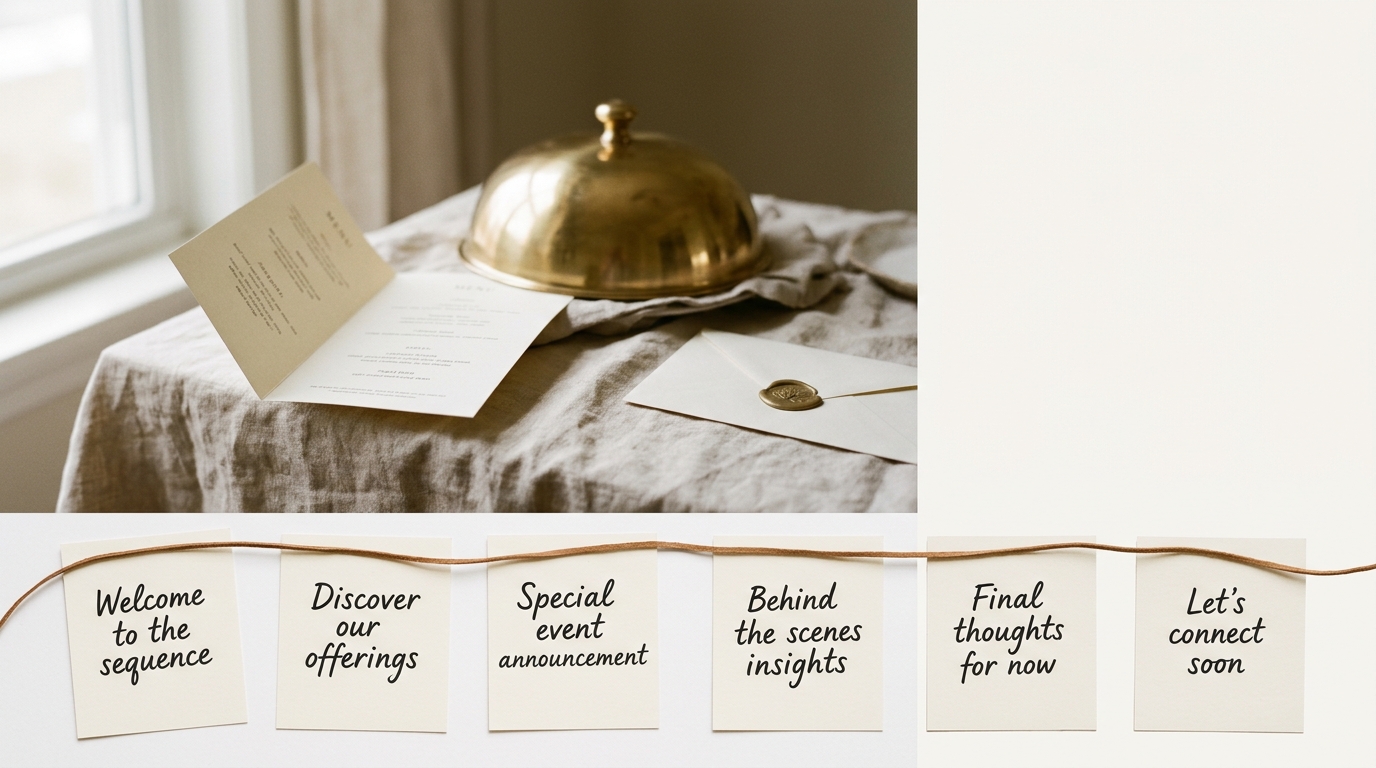
Welcome, nurture and re-engagement sequence design
Tuned to Hospitality, Food & Drink — the version we ship to operators in this vertical.
Lifecycle map with behavioural triggers
Tuned to Hospitality, Food & Drink — the version we ship to operators in this vertical.
Branded mobile-first template kit
Tuned to Hospitality, Food & Drink — the version we ship to operators in this vertical.
Deliverability checklist (SPF, DKIM, DMARC, BIMI)
Tuned to Hospitality, Food & Drink — the version we ship to operators in this vertical.
Segmentation playbook (behavioural / lifecycle / value)
Tuned to Hospitality, Food & Drink — the version we ship to operators in this vertical.
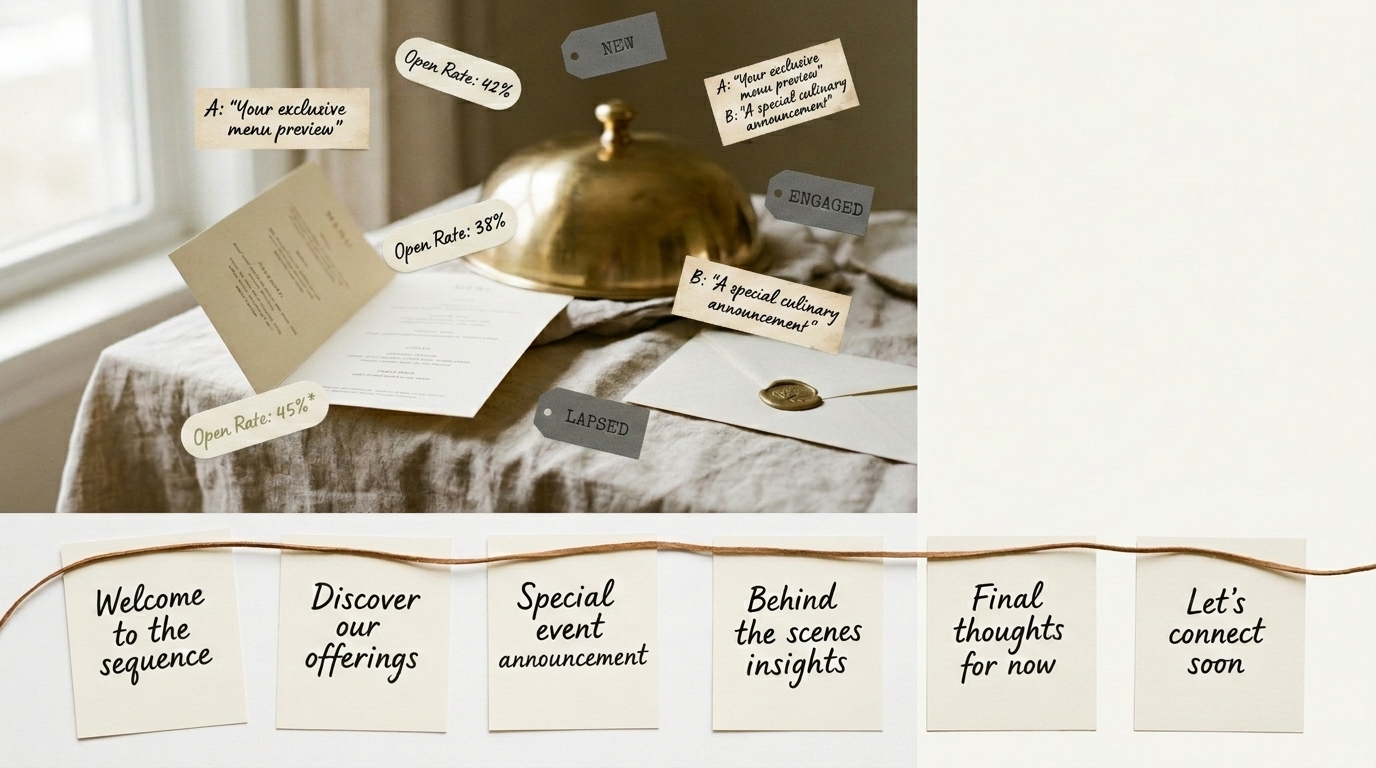
Send-time, subject-line and offer test calendar
Tuned to Hospitality, Food & Drink — the version we ship to operators in this vertical.
SectionHonest reframe
Generic agencies sell restaurants, gastropubs, cafes and small hotels a Mailchimp account, a stock newsletter template, and a "blast Sunday roast to the whole list every Thursday" cadence that ignores the economics of direct booking versus OTA, the post-stay re-engagement window, hotel ADR-aware yield messaging, and the legal reality of allergen-disclosed marketing copy after Natasha's Law. Then they invoice for "list growth" and wonder why the open rate sits at 16%, the unsubscribe rate ticks up after every send, and the GM says the dining room is no fuller on a Sunday than it was a year ago.
The hospitality buyer is not one buyer. The Sunday-roast diner, the private-hire enquiry chasing a 40-cover Christmas booking, the corporate catering buyer pricing a quarterly board lunch, the OTA-acquired hotel guest the operator is desperate to convert into a direct re-booker, and the loyalty-card regular who hasn't been in for six weeks are five different conversations. A single undifferentiated newsletter is not a campaign — it's a deliverability liability, an unsubscribe pump, and a margin-leaker on the OTA-versus-direct split where every recovered direct booking is worth 15–20% of room rate back to the bottom line.
Generic agencies skip the parts that actually move covers and ADR: SPF/DKIM/DMARC and BIMI deliverability hardening, direct-booking incentive automation, post-stay/post-visit re-engagement, hotel ADR-aware yield messaging, private-hire and events segmentation, a real loyalty programme, allergen-disclosed marketing copy compliant with Natasha's Law, and transactional/marketing separation so booking confirmations don't get caught in the same reputation hit as a botched promo send. This playbook fixes all of it. Run it yourself, run it with us, or have us ship it on retainer.
SectionEight-point audit
Score yourself red / amber / green this week.
- SPF, DKIM, DMARC and BIMI deliverability hardening. Authenticated SPF on the sending domain, DKIM signing on every send, DMARC at minimum
p=quarantine(targetp=rejectonce aligned), and a BIMI record with a verified VMC certificate displaying your venue logo in Gmail and Apple Mail. If your DMARC is missing or set top=nonewith no aggregate reports being read, your inbox placement is a coin-flip and your "Easter set menu" send is going to Promotions or worse. Generic ESP defaults won't pass scrutiny against Gmail and Yahoo's bulk-sender requirements; for a venue that depends on weekly broadcast, this is non-optional. - Direct-booking incentive emails (vs OTA-recapture economics). A live segment of OTA-acquired guests (Booking.com, Expedia, Hotels.com) being walked through a direct re-book offer that beats the OTA price by the commission spread — typically 12–18% — with a named-room offer, a stay credit, or a free upgrade. If your hotel is paying 15–20% to OTAs on every repeat stay because you never asked the guest to book direct next time, you're funding a competitor's margin. The mechanic is a 2–3 email post-stay sequence with a clear direct-booking incentive and a code that ties to your PMS.
- Post-stay / post-visit re-engagement automation. A scheduled arc fired 24 hours, one week, and one month after the stay or visit, asking for a Tripadvisor or Google review, offering a return-visit incentive, and segmenting respondents into the loyalty list. If your only post-visit comms is a static "thanks for visiting" and the next mass send three weeks later, you're missing the highest-intent re-engagement window in the entire cycle.
- Hotel ADR-aware yield messaging. Mid-week ADR-protection broadcasts to dormant guests when forward occupancy is below threshold, peak-week ADR-uplift broadcasts to the loyalty list when forward demand is firm, and seasonal shoulder-period offers to the right segment with the right rate. If every email goes out at the same blanket rate regardless of forward occupancy, you're either leaving rate on the table on a peak weekend or letting rooms sit empty mid-week. ADR-aware sends connect the ESP to the PMS forward-occupancy view so the broadcast goes to the right segment at the right time.
- Private-hire / events / catering segment. A separate segment and nurture for private-hire enquirers (weddings, Christmas parties, corporate dinners, wakes, christenings), private-dining-room buyers, and off-site catering buyers. The buyer cycle here is 3–9 months long with a £2,000–£20,000 average booking, not a £45 cover; treating them like a Sunday-roast subscriber is a category error. Tagged segments captured at enquiry, a buyer-cycle nurture mapped to enquiry-month versus event-month, named-event-manager bylined content, comparable-event case studies, and a deadline anchor where the calendar is filling up.
- Loyalty / repeat-visit programme. A points, stamp, or stay-credit mechanic that recognises the regular and rewards return visits, with a transactional layer that triggers an email when a milestone is hit (5th visit, 10th stay, anniversary of first visit), and a tier mechanic that gives the highest-frequency guests something the casual subscriber doesn't get (early reservation access, named-table holds, complimentary upgrades). If your loyalty programme is a paper card pinned behind the till and there's no email layer, you're running a list of strangers, not a community.
- Allergen-disclosed marketing copy (Natasha's Law). Every menu-driven email — set-menu announcement, seasonal menu launch, supper-club, tasting menu — carries the 14-allergen disclosure inline or via a clearly linked allergen statement, with a documented internal review pre-send. Natasha's Law (UK Food Information Amendment 2021) extends to PPDS and is being interpreted increasingly broadly by EHOs; an allergen-omitted promo email is a regulatory exposure as well as a customer-trust hit. Your FSA hygiene rating is on the email-marketing risk register whether you treat it that way or not.
- Transactional vs marketing separation. Booking confirmations, check-in instructions, table-reservation reminders, gift-voucher fulfilment, and post-stay statements sent from a transactional subdomain (e.g.
mail.yourvenue.co.uk) on a transactional ESP or relay; marketing newsletters, set-menu announcements and loyalty broadcasts sent from a marketing subdomain (e.g.news.yourvenue.co.uk) on the marketing ESP. If both flow through the same domain and one marketing reputation hit drags the transactional inbox placement, your booking confirmations land in spam and the duty manager is fielding "did you receive my reservation?" calls all evening. Separation is a one-day DNS and ESP setup with permanent dividends.
Three or more reds — fix the foundation before the next set-menu send.
SectionSix deliverables
Deliverability hardening — SPF, DKIM, DMARC and BIMI. Day-one DNS audit and remediation: SPF record with the correct sending sources only (no over-permissive +all), DKIM keys generated and rotated for the marketing and transactional ESPs, DMARC published at p=quarantine with aggregate report monitoring, escalated to p=reject once alignment is verified, and a BIMI record with a verified VMC certificate so your venue logo appears in Gmail and Apple Mail. Inbox placement testing across Gmail, Outlook 365, Apple Mail and Yahoo before and after. Time to first signal: 14 days for inbox-placement lift visible in seed-test data.
Direct-booking incentive automation. A 2–3 email post-stay sequence triggered for OTA-acquired guests (Booking.com, Expedia, Hotels.com tagged at PMS export), walking them through a direct re-book offer that beats the OTA price by the commission spread — typically a 12–18% margin recovery on every converted re-booking. Named-room offer, stay credit, or free upgrade with a code that ties to the PMS booking engine. We map your existing PMS, ESP and CRM, design the OTA-tag taxonomy, build the post-stay trigger, and ship the offer template library. The arithmetic is unforgiving: a hotel doing 1,200 OTA-acquired room nights per year at £140 ADR with 16% commission is bleeding £26,880 annually; converting 30% of those guests to direct re-booking on the next stay is roughly £8,000 of recovered margin. Time to first signal: 60 days from first sequence send.
Post-stay / post-visit re-engagement automation. A scheduled arc fired 24 hours, one week and one month after the stay or visit. Day-one is a thank-you with a Tripadvisor / Google / OpenTable review prompt; week-one is a soft return-visit offer; month-one is a "we'd love to see you again" with a dated incentive (e.g. midweek 20% off or a complimentary glass on arrival). Respondents are segmented into the loyalty list automatically. The review-rate lift on a properly sequenced day-one send typically runs 3–5x a passive "thanks for visiting" baseline; the return-visit lift on the month-one send is the single highest-leverage re-engagement mechanic in this audit.
Hotel ADR-aware yield messaging. Mid-week ADR-protection broadcasts to dormant guests when forward occupancy is below threshold, peak-week ADR-uplift broadcasts to the loyalty list when forward demand is firm, seasonal shoulder-period offers to the right segment with the right rate. We connect your ESP to the PMS forward-occupancy view (Mews, Cloudbeds, Little Hotelier, Guestline) so the broadcast logic fires when the operator needs it: occupancy projection 14 days out below threshold triggers a midweek-stay offer to the dormant segment; forward demand firm on a peak weekend triggers an ADR-uplifted package to the loyalty segment. The mechanic stops you sending the same offer at the same rate regardless of demand. Time to first signal: 30 days for first ADR-aware broadcast cohort.
Private-hire and events campaigns. A dedicated segment and 4–8 email nurture for private-hire enquirers (weddings, Christmas parties, corporate dinners, wakes, christenings), mapped to enquiry-month versus event-month so a January enquiry for a December wedding gets the right content at the right week. Named-event-manager bylined content, comparable-event case studies with photographs, menu and beverage package examples, deadline anchors where the calendar is filling. Christmas-party nurture is a separate fast-cycle arc fired May–October. The buyer cycle here is 3–9 months long with a £2,000–£20,000 average booking; an undifferentiated newsletter cadence misses the entire conversation.
Loyalty and repeat-visit programme. A points, stamp or stay-credit mechanic plugged into the ESP and POS / PMS so every visit accrues, every milestone triggers an email, and the highest-frequency guests get tier benefits the casual subscriber doesn't (early reservation access on a new menu launch, named-table holds for the supper club, complimentary upgrades on a return stay). We design the mechanic, integrate it to your existing systems, write the trigger emails, and build the tier-benefit logic. The installed regular is the highest-LTV asset on the platform; this programme turns "thanks for visiting" into a 3–5 year frequency relationship. Time to first signal: 45 days for first cohort milestones to fire.
Time to first signal: 30 days on two or more.
SectionWhat to do this week
Three actions, ranked by leverage.
- Pull your DMARC report and check your sending policy. Owner: founder, GM or marketing manager. Time: 30 minutes. Run a DMARC lookup on your sending domain (
dig _dmarc.yourvenue.co.uk TXTor any free DMARC checker). If the record is missing, set top=nonewith no aggregate reports being read, or pointing nowhere, this is your single highest-leverage fix. Ship a hardened SPF/DKIM/DMARC stack inside two weeks and watch your set-menu send placement lift before any other change. - Count your segments — and find your OTA tag. Owner: marketing manager or GM. Time: 20 minutes. Open your ESP and count the segments in active use. If it's one master list, or a handful of legacy tags with no booking-source dimension, your next send is mistargeting four out of five recipients. At minimum: OTA-acquired hotel guests, direct-booked hotel guests, dining-room regulars, private-hire enquirers, loyalty members, dormant 90+ days. The OTA tag specifically is the unlock for the direct-booking incentive sequence.
- Decide DIY, DWY or DFY for the next 90 days. Owner: founder or GM. Time: 30-min discovery call. We'll confirm the right way in writing within two business days. See the three ways.
SectionFive questions
What's the actual ROI on a direct-booking incentive sequence versus paying OTA commission? The arithmetic is unforgiving and the numbers are simple. A 30-room hotel doing 60% occupancy across 365 nights is 6,570 room nights; if 40% are OTA-acquired at 16% commission on £140 ADR, that's £58,800 of annual commission paid out. Convert 30% of those guests to direct re-booking on the next stay through a properly sequenced post-stay incentive offer and you recover roughly £18,000 of margin in year one, with compounding through year two as the direct-booker base grows. The build is 60 days; the dividend is permanent. The mechanic only works if the OTA tag is captured at PMS export, so if you don't currently know which guest came from which channel, that's the prerequisite.
What's a realistic post-stay / post-visit re-engagement lift in numbers? Day-one review-prompt sends typically lift Tripadvisor and Google review-rate 3–5x a passive baseline — i.e. a venue collecting 12 reviews a month from organic prompts goes to 40–60 reviews a month from a sequenced day-one send. Month-one return-visit sends typically convert 8–14% of recipients into a return booking inside 30 days on a midweek incentive, depending on cuisine, price-point and ticket size. On a 15,000-cover annual venue with average spend per cover at £55, even a 1% lift in return-visit rate is roughly £8,250 of recovered revenue per year. The sequence is built in 30–45 days and runs forever.
How does ADR-yield messaging actually work — what's the mechanic? The ESP is connected to the PMS forward-occupancy view (Mews, Cloudbeds, Little Hotelier, Guestline, Opera, etc.) via API or middleware. Occupancy projection 14 days out below threshold (typically <55% on midweek nights) triggers a dormant-segment send with a midweek-stay incentive at a protected rate. Forward demand firm on a peak weekend (>85% occupancy 30 days out) triggers a loyalty-segment send with an ADR-uplifted package — early access, named room, breakfast included at full rate. The point is to stop sending the same blanket "20% off all stays" offer regardless of demand; that offer hits your peak weekends and your shoulder Tuesdays equally and erodes ADR on both. ADR-aware messaging typically lifts blended ADR 4–8% within 90 days of go-live for properties that previously sent flat-rate broadcasts.
How do we keep allergen-aware copy compliant without slowing the calendar? The Natasha's Law mechanic for marketing email is straightforward: every menu-driven send carries the 14-allergen disclosure either inline (preferred for short menus, e.g. set menu, supper-club menu) or via a clearly linked allergen statement on the venue website that is updated in lockstep with the menu (preferred for long menus). We build the disclosure into the email template as a required field with a sign-off step; no menu-driven send leaves the ESP without it. The internal review takes 5–10 minutes per send once the template is right. The legal exposure on an allergen-omitted send that triggers a customer reaction is far worse than the marginal extra time; treat it as a non-negotiable build into the calendar, not an optional polish.
Can we run this with the playbook plus £750 question? Yes. The full SPF/DKIM/DMARC/BIMI hardening plus direct-booking incentive automation plus post-stay re-engagement plus ADR-aware yield messaging plus private-hire nurture plus loyalty programme is achievable in-house with a marketing manager, a developer half-week for the DNS, ESP and PMS integration build, and a chef or events-manager interview cycle for the bylined content. The £750/month coaching plan gives you weekly review of the calendar, the segments, the template builds, the deliverability monitoring and the ADR-aware trigger logic, plus access to the campaign-template library and the hospitality-specific seasonal calendar. Credit toward first cycle if you sign for DWY/DFY within 30 days.
SectionWhere to go from here
If you want this shipped end-to-end on a productised retainer, book a 30-minute discovery call. Tailored proposal in writing within two business days.
If you'd rather have a senior practitioner reviewing your segments, deliverability monitoring, ADR-aware triggers and seasonal templates each week, the coaching plans start at £750/month with rolling cycles and walk-away rights. If you have a hard deadline — a menu rebrand, a pre-summer launch, a Christmas-party push, a peak-season ADR window — the two-week embedded sprint lands a senior practitioner inside your ESP, PMS, CRM and DNS for ten working days at £3,000 fixed for a menu rebrand or pre-summer launch.
Or run it yourself. Read this playbook end to end, run the eight-point audit, ship one deliverable a month for six months. Twice-quarterly office hours are open to anyone using the playbooks — bring your work, get reviewed, no charge.
Get Email Marketing for Hospitality, Food & Drink.
A focused, no-fluff playbook covering the audit, the deliverables, the success signals and the cadence we use when we run this combination for clients. Hospitality, Food & Drink-specific from the first page to the last.
No spam. One playbook, one follow-up email a week later asking what landed and what didn’t. Unsubscribe in one click.
Where the playbook ends and the engagement begins.
The framework, free
- The eight-point audit baseline so you can score your own site this week
- The six productised deliverables we ship per cycle, named and explained
- The 30/60/90 fix roadmap so you can plan internal capacity
- The three-way model (DIY / DWY / DFY) and price bands
- The success metrics we track and the time-to-signal canon
- The industry-specific regulators, sub-verticals and trust signals
What requires the call
- Named-client case studies with revenue numbers (NDA-protected)
- Our internal tooling stack and platform vendors (trade-secret)
- The proprietary scoring rubric we use to triage problems
- Specific commercial terms beyond published price bands
- Direct introductions to our partner network
- The post-engagement playbook revisions we ship per cycle
Adjacent combinations operators in this vertical also read.
Email Marketing for Trades & Home Services
A focused playbook for Trades & Home Services operators running Email Marketing.
Open the playbook → PLAYBOOKEmail Marketing for Beauty & Personal Care
A focused playbook for Beauty & Personal Care operators running Email Marketing.
Open the playbook → PLAYBOOKAI & Intelligence for Hospitality, Food & Drink
A focused playbook for Hospitality, Food & Drink operators running AI & Intelligence.
Open the playbook → PLAYBOOKStrategy & Consultancy for Hospitality, Food & Drink
A focused playbook for Hospitality, Food & Drink operators running Strategy & Consultancy.
Open the playbook →Start your Email Marketing for Hospitality, Food & Drink programme.
Thirty-minute discovery call, free, no commitment. We’ll send a tailored band before the call and a written proposal within two business days.