
SEO & Organic Growth for Beauty & Personal Care — The Practitioner’s Playbook.
A focused playbook for Beauty & Personal Care operators running SEO & Organic Growth. CAP / ASA code constrains aesthetics advertising more than most operators realise, and one breach can cost a year of media budget. Salon, clinic, retail and training each have their own funnel economics — combining them dilutes everything.
SEO & Organic Growth for Beauty & Personal Care is its own discipline.
Six things this playbook covers, end to end.
Pillar-and-cluster architecture and intent-mapped editorial calendar
Tuned to Beauty & Personal Care — the version we ship to operators in this vertical.
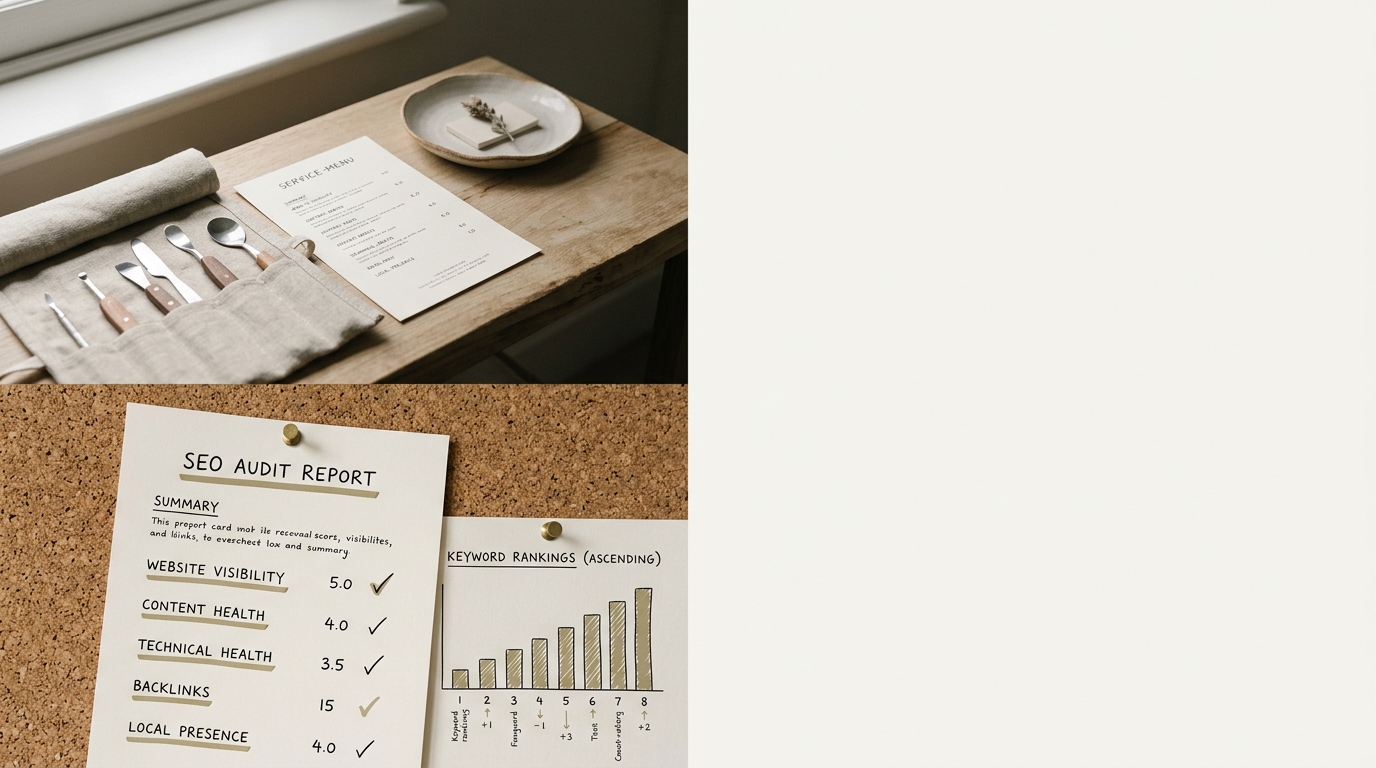
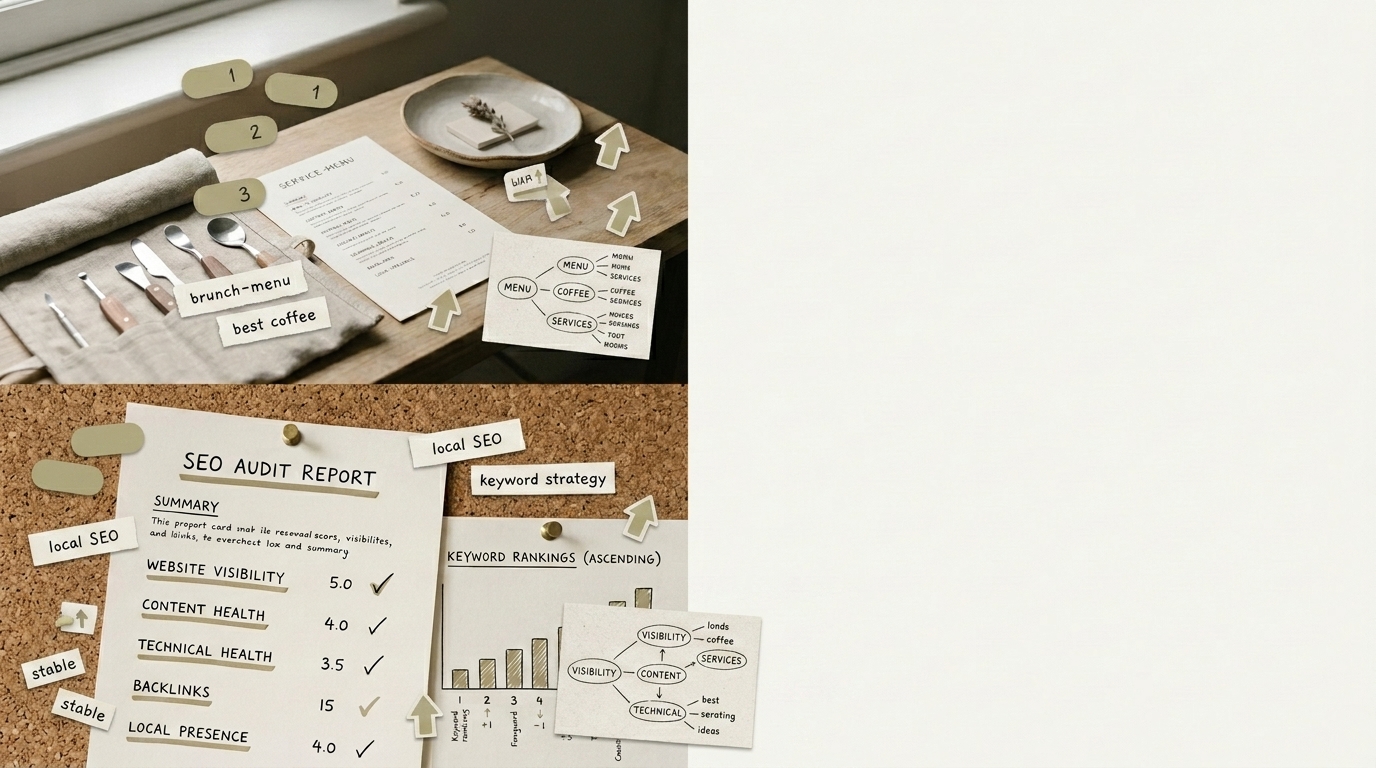
Technical, on-page, off-page and local-pack audit
Tuned to Beauty & Personal Care — the version we ship to operators in this vertical.
Internal-link plan and migration runbook
Tuned to Beauty & Personal Care — the version we ship to operators in this vertical.
Schema.org markup spec and AI-search optimisation (GEO)
Tuned to Beauty & Personal Care — the version we ship to operators in this vertical.
Monthly rank, traffic and conversion attribution dashboard
Tuned to Beauty & Personal Care — the version we ship to operators in this vertical.
Quarterly compound review with roadmap refresh
Tuned to Beauty & Personal Care — the version we ship to operators in this vertical.
SectionThe honest reframe most SEO agencies won't tell you
Generic SEO agencies sell hair salons, beauty bars, barbers and aesthetic clinics a "local SEO package" built around terms like "best hair salon Bournemouth." Then they wonder why a Fresha listing or a Treatwell category page out-ranks the salon's own website on every commercial query that matters.
Beauty & personal care is a booking-platform-dominated market. Fresha, Treatwell, Booksy and Phorest sit on top of "[treatment] near me" intent because they have the booking flow, the reviews, the deep links and the schema. Generic SEO agencies don't structure for this — they ignore per-treatment search intent (balayage vs highlights vs bleach-and-tone is three queries, not one), they ignore stylist-level personal-brand searches (clients search the stylist by name once they've been once), and they walk into ASA / MHRA territory on aesthetics without realising the regulator reads salon websites.
This playbook fixes the structure. The per-treatment architecture is the multiplier. The stylist-level pages are the moat. The booking-platform integration is what stops Fresha eating your organic traffic. And the ASA/MHRA discipline is what stops a five-figure CAP fine landing in your inbox the week you launch a new aesthetic line. Read it, run it yourself, or have us ship it on retainer.
SectionThe eight-point audit we run on day one
Score your own site + GBP + booking-platform stack red / amber / green this week.
- Per-treatment pillar pages with Service schema — One indexable page per treatment (balayage, highlights, gel manicure, lash lift, microblading, lip filler, anti-wrinkle injections) with
ServiceJSON-LD, structured price ranges, expected duration, named providers, related treatments. Most salons have one Services page listing 40 treatments — that's an order-of-magnitude undershoot on commercial intent. - Per-stylist Person schema + bookable Service —
PersonJSON-LD per stylist withjobTitle,worksFor,knowsAbout(treatments they specialise in), and a bookableServicelinking through to their Fresha / Treatwell / Phorest profile. Stylist-level personal brands drive 30–60% of repeat traffic in this category and almost no salon site captures it. - Fresha / Treatwell / Booksy / Phorest integration with deep-linked booking pages — Every treatment page and every stylist page deep-links to the specific service-and-provider combination on the booking platform. Not "Book Now → homepage of Fresha." Direct deep link to /treatment/stylist/calendar. Conversion lift on this single change is typically 30–50%.
- Before/after gallery with ImageObject schema (ASA-compliant captioning) —
ImageObjectschema per gallery image withcaption,creditText(named stylist),description. Captions disclose treatment type, time elapsed, and any after-care. ASA upheld dozens of salon complaints in 2024–2025 on misleading before/after framing — the ones who survive disclosure are the ones who structured for it. - Review architecture: Fresha + Treatwell + Google Business Profile — Most operators have reviews fragmented across three platforms with no aggregation, no recency, no response cadence. Local-pack and platform algorithms both reward steady velocity and owner replies. 6–12 new reviews per location per month is the canon for healthy salons.
- Aesthetic-claims compliance review (ASA / MHRA where applicable) — Anti-wrinkle injections, dermal filler, fat-dissolving, skin-tightening — anything pharmaceutical or device-based. ASA / CAP have been increasingly aggressive 2023–2026 on superlatives ("best results," "permanent," "no downtime"), unmoderated before/afters, and prescription-only-medicine references. MHRA enforces against Botox advertising directly to the public. Get this wrong and the cost is a public adjudication on the ASA website that ranks for your brand name for years.
- Mobile Core Web Vitals on the booking page — LCP under 2.5s, INP under 200ms, CLS under 0.1 on the page that converts. Booking pages with embedded Fresha / Treatwell widgets are usually the slowest pages on a salon site and the highest-intent.
- Per-location Google Business Profile for multi-site salons — Each branch gets its own verified GBP with its own primary category, services list, photos, hours, reviews. Multi-site salons that run one GBP plus "service area" leak local-pack ranking on every location after the first.
Three or more reds — fix the foundation before commissioning new content.
SectionSix productised deliverables we ship per cycle
Per-treatment pillar architecture. One indexable page per treatment, with full Service JSON-LD, named providers, structured price range, expected duration, related treatments, and an inline FAQ block addressing the 8–12 questions buyers actually ask before booking. For a typical hair-and-beauty salon this is 30–60 indexable pages from a single template. Time to first signal: 30 days.
Per-stylist personal-brand pages. Person schema per stylist, with credentialling (NHBF / BABTAC / Habia membership numbers where applicable), specialisms, gallery, named treatments they perform, bookable deep link. Captures the "[stylist name] [town]" branded queries that drive repeat traffic and referrals. Time to first signal: 45 days.
Booking-flow + deep-link integration. Every treatment page and every stylist page deep-links to the exact service-provider-calendar combination on Fresha / Treatwell / Booksy / Phorest. UTM tagging so booking-platform conversions show up in your GA4 attribution. Eliminates the "Book Now → 4 clicks → friction → drop-off" pattern that is the single biggest leak in this category.
ASA-compliant before/after gallery. ImageObject schema with treatment, elapsed time, named stylist, after-care disclosed. Image-set rotation (no cherry-picked single results), realistic results not extreme outliers, conditions of use stated. Survives ASA / CAP scrutiny while still selling the work. Time to first signal: 14 days on the structural piece; compounding on visibility.
Review velocity programme. Post-appointment SMS or email automation routed through your booking platform's API (Fresha, Treatwell, Booksy, Phorest all support this). Diversified across Fresha + Treatwell + Google. Target 6–12 new reviews per location per month, with 80%+ owner-response rate on Google.
Mobile CWV + booking-page tuning. LCP under 2.5s, INP under 200ms, CLS under 0.1 on the booking page specifically. Lazy-load the embedded Fresha / Treatwell widget below the fold; preconnect to the booking-platform CDN; defer non-critical scripts. Lighthouse CI in your build pipeline so future deploys can't regress.
SectionWhat to do this week
Three actions, ranked by leverage.
- Count your indexable treatment pages. Owner: founder or marketing manager. Time: 15 minutes. Run
site:yourdomain.co.ukand tally pages per treatment. If you offer 40 treatments and have one Services page, you're under-indexed by 39 pages and leaking commercial-intent traffic to Fresha and Treatwell on every one. - Audit your booking deep links. Owner: founder. Time: 20 minutes. Click "Book Now" from your homepage, your most popular treatment page, and a stylist profile if you have one. How many clicks until a real calendar appears? If it's more than two, you have a conversion leak that no amount of new content will fix.
- Decide DIY, DWY or DFY for the next 90 days. Owner: founder. See the three ways.
SectionFive questions salon / aesthetic operators ask us about SEO
Should we even bother with our own site when Fresha / Treatwell drive most of our bookings? Yes — your own site is where the high-margin bookings happen and where you control the data. Booking platforms charge 2–3% per booking and own the customer relationship. Operators who run both well typically see 40–60% of bookings via their own site within 12 months, at zero per-booking commission. The platforms remain useful for top-of-funnel; your site is where the LTV lives.
How aggressive can we be on aesthetic claims for injectables? Less aggressive than your competitors are. ASA / CAP have been escalating 2023–2026: superlatives ("best," "amazing," "transformational") will trigger complaints; "Botox" cannot be used in consumer advertising under MHRA rules (it's a prescription-only medicine — the trade name is restricted). Factual descriptions of the procedure, realistic before/afters with disclosure, and named-practitioner credentials are the legitimate route. We refuse to ship copy that crosses the line, and operators who structure properly are the ones still trading when CAP cleans the category up further.
Are stylist-level personal-brand pages really worth the editorial effort? Yes, by a margin most operators underestimate. Search Console data on accounts we've worked on consistently shows 25–45% of branded organic traffic flowing to stylist pages once they're indexed, with conversion rates 1.5–2x the homepage. Plus they're a retention lever — when a stylist moves chair, the salon owns the SEO equity, not the stylist's personal Instagram.
What kind of booking-conversion lift should we expect from deep-linking? 30–50% on the booking-page → completed-booking step is typical when you go from "Book Now → platform homepage" to "Book Now → exact treatment-stylist-calendar combination." The compounding effect of better attribution data (UTM-tagged conversions in GA4) is bigger over 12 months because it lets you reinvest spend into the treatments and stylists actually converting, not the ones that look busiest in the calendar.
Can we run this ourselves with the playbook + £750 audit? Yes. The per-treatment + per-stylist architecture is achievable in-house with a marketing manager + one dev half-week. The booking deep-link integration is a one-day developer task on Fresha / Treatwell APIs. The review-velocity programme runs on the booking platform's existing automation tooling. The ASA / MHRA compliance review benefits from external eyes — particularly on aesthetics. The £750 audit gives you a written red/amber/green of all eight points + named-owner / dated next steps. Credit toward first cycle if you sign for DWY/DFY within 30 days.
SectionWhere to go from here
If you want this shipped end-to-end on a productised retainer, book a 30-minute discovery call.
If you'd rather have a senior practitioner reviewing your team's work each week, the coaching plans start at £750/month. The two-week embedded sprint at £3,000 fixed is the right call for new-location launches or stylist-rebrand windows where you need the architecture live before opening day.
Or run it yourself. Eight-point audit + one deliverable a month + twice-quarterly office hours.
Get SEO & Organic Growth for Beauty & Personal Care.
A focused, no-fluff playbook covering the audit, the deliverables, the success signals and the cadence we use when we run this combination for clients. Beauty & Personal Care-specific from the first page to the last.
No spam. One playbook, one follow-up email a week later asking what landed and what didn’t. Unsubscribe in one click.
Where the playbook ends and the engagement begins.
The framework, free
- The eight-point audit baseline so you can score your own site this week
- The six productised deliverables we ship per cycle, named and explained
- The 30/60/90 fix roadmap so you can plan internal capacity
- The three-way model (DIY / DWY / DFY) and price bands
- The success metrics we track and the time-to-signal canon
- The industry-specific regulators, sub-verticals and trust signals
What requires the call
- Named-client case studies with revenue numbers (NDA-protected)
- Our internal tooling stack and platform vendors (trade-secret)
- The proprietary scoring rubric we use to triage problems
- Specific commercial terms beyond published price bands
- Direct introductions to our partner network
- The post-engagement playbook revisions we ship per cycle
Adjacent combinations operators in this vertical also read.
SEO & Organic Growth for Health & Wellbeing
A focused playbook for Health & Wellbeing operators running SEO & Organic Growth.
Open the playbook → PLAYBOOKSEO & Organic Growth for Combat Sports & Fitness
A focused playbook for Combat Sports & Fitness operators running SEO & Organic Growth.
Open the playbook → PLAYBOOKBrand & Design for Beauty & Personal Care
A focused playbook for Beauty & Personal Care operators running Brand & Design.
Open the playbook → PLAYBOOKStrategy & Consultancy for Beauty & Personal Care
A focused playbook for Beauty & Personal Care operators running Strategy & Consultancy.
Open the playbook →Start your SEO & Organic Growth for Beauty & Personal Care programme.
Thirty-minute discovery call, free, no commitment. We’ll send a tailored band before the call and a written proposal within two business days.