
Programmatic Web Development for Events & Entertainment — The Practitioner’s Playbook.
A focused playbook for Events & Entertainment operators running Programmatic Web Development. Event marketing collapses when the drumbeat starts week-of — the 8-12 week pre-event programme is where the economics actually work. Tickets, hospitality, sponsorship and broadcast are four different audiences and need four different funnels.
Programmatic Web Development for Events & Entertainment is its own discipline.
Six things this playbook covers, end to end.
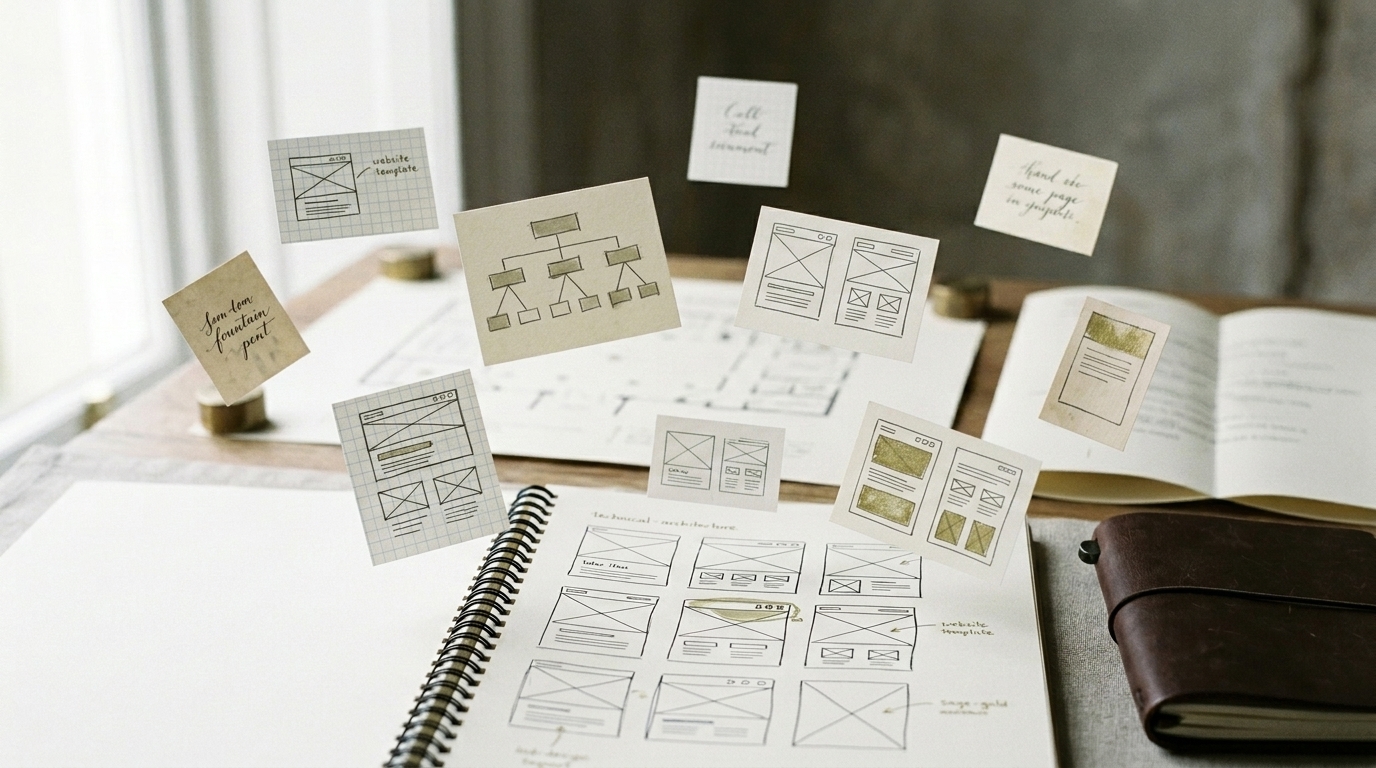
Wireframe set and Figma component library
Tuned to Events & Entertainment — the version we ship to operators in this vertical.
Performance budget for LCP, CLS and INP
Tuned to Events & Entertainment — the version we ship to operators in this vertical.
WCAG 2.1 AA accessibility audit and remediation plan
Tuned to Events & Entertainment — the version we ship to operators in this vertical.
Technical build spec for every page template
Tuned to Events & Entertainment — the version we ship to operators in this vertical.
Migration plan with redirect map
Tuned to Events & Entertainment — the version we ship to operators in this vertical.
Quarterly accessibility re-audit and Core Web Vitals report
Tuned to Events & Entertainment — the version we ship to operators in this vertical.
SectionThe honest reframe most agencies won't tell you
Most venue, photographer and planner websites are built like online photo galleries. A homepage with a hero slideshow, a Gallery page that lazy-loads forty 6 MB JPEGs, an About page, a Contact page, and a single "Weddings" or "Events" page that lists every event type in three short paragraphs. Then the agency wonders why mobile bounce rates are 70%, why Q1 enquiries don't convert, and why the venue down the road keeps winning the show-rounds.
Events and entertainment is a multi-event-type, image-heavy, seasonally-spiked buying journey. The couple searching "wedding venue 80 guests Dorset" is a different buyer from the corporate planner searching "conference venue Bournemouth 120 delegates," who is a different buyer from the family searching "milestone birthday venue with private dining." Three different intents, three different schemas, three different conversion routes. Treating them as one audience on one Events page is exactly why the brochure-style sites convert at 2–5% and properly-built sites convert at 9–14%.
This playbook fixes the structure. It's not about a redesign — it's about per-event-type page architecture, gallery-CWV engineering, availability-calendar integration, and an enquiry-to-tour flow that respects the seasonality of the category. Read it, run it yourself, or hand the build over on retainer.
SectionThe eight-point audit we run on day one
Score your own site red / amber / green this week.
- Per-event-type pillar pages with Event / Place schema — Separate, indexable pillar pages for wedding events, corporate events and private events (milestones, christenings, wakes, charity dinners), each with its own
EventandPlaceschema, gallery, pricing language, FAQs and enquiry route. Most venues run one Events page that tries to serve all three buyers and ranks for none. - Availability calendar integration with date-range filter — Live availability surfaced on the site with a date-range filter the visitor can interact with before they enquire. Couples and corporate planners want to know if their target dates are open before they fill out a form. Tools like Vagaro, EventTemple, Tagvenue or a properly-built WordPress plugin (Booking Calendar, Amelia) handle this. A static "Contact us for availability" loses the impatient enquiry.
- High-resolution gallery + Lightbox with CWV optimisation — Real-photography galleries are the highest-engagement asset in this category and the single most common site choke-point. AVIF / WebP conversion, responsive
srcset, lazy-load below the fold, async-decode hints on the hero, dimensions reserved on every image. Lightbox component that doesn't block INP. - Enquiry-to-tour booking flow with Calendly-style integration — A short, mobile-first enquiry form that hands off into a self-serve tour-booking step (Calendly, SavvyCal, YouCanBook.me, or a native plugin). The enquiry gets logged, the qualified buyer self-books a tour, the show-round conversion rate climbs because hot leads don't cool waiting for a callback.
- Mobile CWV on the gallery page (the choke-point) — LCP under 2.5s, INP under 200ms, CLS under 0.1 specifically on the gallery page, not just the homepage. 70%+ of enquiries originate on mobile after one partner shows the other the photos. An 8-second LCP on a gallery hero loses the second partner before the form loads.
- Per-venue LocalBusiness + EventVenue schema — Multi-property operators need separate
LocalBusiness+EventVenueschema declarations for each venue, each with its own Google Business Profile, address, geo-coordinates, capacity range, opening hours and review aggregate. Single combined schema across multiple venues is how operators leak local-pack visibility. - Q1-traffic-surge handling (40–60% Jan–Mar enquiry spike) — Post-engagement enquiry season runs January through March. Properly-built sites carry hosting + edge cache that absorbs 40–60% surge traffic without LCP regression. A site that runs 2.1s LCP in October and 4.8s LCP in late January costs you the year.
- Build pipeline with image-CDN + lazy-load — Cloudflare Images, Bunny CDN, Imgix, Optimole or a managed-host CDN delivering AVIF / WebP at the right pixel density. Source-controlled WordPress with staging and one-click rollback. Lighthouse CI gating every deploy.
Three or more reds — fix the foundation.
SectionSix productised deliverables we ship per cycle
Per-event-type pillar architecture. Separate pillar pages for wedding, corporate and private events, each with its own pricing language, gallery cluster, testimonials, FAQs, schema set and enquiry route. Internal linking from the home page to the right pillar by buyer intent. Event + Place schema on every pillar; supporting blog cluster (10–15 posts per pillar) seeded into the architecture. Time to first signal: 30 days. Owned by you, exportable as Notion + PDF.
Availability calendar integration. Live availability surfaced on each event-type pillar with a date-range filter, integrated against the booking system you already use (Vagaro, EventTemple, Tagvenue, Amelia, Booking Calendar). Date selection pre-populates the enquiry form. Closed dates clearly marked. Returning visitors see updated availability without a hard refresh. Reduces "is this date open" enquiries by 60–80% and lifts qualified-tour conversion.
Gallery CWV + lazy-load optimisation. AVIF / WebP conversion across the entire image library, responsive srcset, lazy-load below the fold, async-decode hints on hero images, font preconnect, dimensions reserved on every image, Lightbox component that doesn't block INP. Gallery LCP target under 2s on mobile. Lighthouse CI gates future deploys so an over-eager photographer's 12 MB upload can't regress the site. Time to first signal: 14 days.
Enquiry-to-tour booking flow. Short mobile-first enquiry form (5 fields max) hands off into a self-serve tour-booking step. Calendly / SavvyCal / YouCanBook.me integration with calendar holds, automated SMS + email reminders, and a CRM webhook into HubSpot, Zoho or whatever you run. Hot leads self-book; cold leads are logged for follow-up. Show-round conversion rate typically lifts from 25–35% to 45–55%.
Per-venue schema + GBP integration. Separate LocalBusiness + EventVenue schema for each property with capacity ranges, geo-coordinates, opening hours and review aggregate. Each venue gets its own Google Business Profile, claimed and synced. Local-pack visibility in venue-search SERPs lifts decisively when each property has its own canonical entity.
Q1-traffic load handling. Cloudflare edge cache + managed WordPress host (Kinsta / WP Engine / Pressable) sized for 40–60% surge traffic without LCP regression. Image-CDN handling on every gallery page. Staging environment for any change, source-controlled with one-click rollback. Pre-Q1 load test in early December so November confidence equals February reality.
SectionWhat to do this week
Three actions, ranked by leverage. Same first three steps we ship in week one of a Foundation retainer for a venue or events operator.
- Run mobile Lighthouse on your gallery page. Owner: marketing manager or developer. Time: 5 minutes. Note the LCP, INP and CLS scores. If LCP is over 3s on the gallery page, this is your highest-leverage fix and the single biggest cause of Q1 enquiry leakage.
- Count your indexable per-event-type pages. Owner: founder. Time: 10 minutes. Open your site. Count separate, indexable pillar pages per event type — wedding, corporate, private events. If it's one combined Events page, you're undershooting indexability and conversion architecture by an order of magnitude.
- Decide DIY, DWY or DFY for the next 90 days. Owner: founder. See the three ways.
SectionFive questions venue / planner / wedding-supplier operators ask us about web development
WordPress, Squarespace or Showit — what's right for a venue or photographer? WordPress for the vast majority. Plugin ecosystem (Yoast for SEO, Schema App for structured data, WP Rocket for caching, Cloudflare for edge, Amelia or Booking Calendar for availability, Imagify or ShortPixel for image optimisation) is unmatched and the team is hireable everywhere. Squarespace is fine for a 10–20 page photographer portfolio but lacks the schema control, programmatic page generation and CWV-tuning that this category needs. Showit is image-driven and beautiful but constrained on technical SEO and form-flow customisation. Custom is over-engineering at this scale unless you're a multi-venue group with 10+ properties.
How heavy can our gallery be before it actually hurts us? Mobile LCP over 3s costs you measurable conversions in this category. The maths: a 6 MB hero image on 4G mobile takes 4–6s to render; a partner who's been shown the venue on a phone has a 5–8s attention budget; the form below the fold doesn't get seen. AVIF + responsive srcset + lazy-load drops a 6 MB hero to a 280 KB visible payload at the right pixel density, with no visible quality loss. Gallery LCP drops from 4–8s to under 2s. We'd run a CWV pass before any new content build or paid spend.
How do we handle the Q1 traffic surge without the site falling over? Three layers. Cloudflare edge cache in front of a managed-host origin (Kinsta, WP Engine, Pressable) sized for 2x peak month. Image-CDN on every gallery page so origin requests stay low. Pre-Q1 synthetic load test in early December — we run the site through a 3x simulated peak and read off LCP, INP and origin CPU. Most properly-built venue sites absorb 40–60% Jan–Mar surge with no LCP regression on this stack. The ones that fall over are the ones running on entry-level shared hosting with no edge cache.
Which availability calendar tool is the right fit? Depends on your existing operations stack. Vagaro and EventTemple are the closest to purpose-built for venues with full booking + CRM + invoicing. Tagvenue is strong for corporate and private events with a public listing flow. Amelia is the best WordPress-native plugin if you want everything inside the site. Booking Calendar and HBook are lighter-weight alternatives. We'd never recommend a custom-built availability widget unless you're a multi-venue group with bespoke pricing logic — the off-the-shelf tools have solved 95% of the cases already.
Can we run this ourselves with the playbook + £750 audit? Yes. The per-event-type pillar rebuild is achievable in-house with a marketing manager + a developer half-week. The availability calendar integration is a 1–2 day developer task once the tool is chosen. The gallery CWV pass is a one-off engineering sprint with ongoing Lighthouse CI gating. The Q1 surge prep is a December check-list. The £750 audit gives you a written red/amber/green of all eight points + named-owner / dated next steps + a tooling recommendation per integration. Credit toward the first cycle if you sign for DWY or DFY within 30 days.
SectionWhere to go from here
If you want this shipped end-to-end on a productised retainer, book a 30-minute discovery call.
If you'd rather have a senior practitioner reviewing your team's work each week, the coaching plans start at £750/month. The two-week embedded sprint at £3,000 fixed is the right call for Q1-peak preparation in November or December, or for a new-venue / new-property launch that needs to land in the SERP and absorb its first booking surge fast.
Or run it yourself. Eight-point audit + one deliverable a month + twice-quarterly office hours.
Get Programmatic Web Development for Events & Entertainment.
A focused, no-fluff playbook covering the audit, the deliverables, the success signals and the cadence we use when we run this combination for clients. Events & Entertainment-specific from the first page to the last.
No spam. One playbook, one follow-up email a week later asking what landed and what didn’t. Unsubscribe in one click.
Where the playbook ends and the engagement begins.
The framework, free
- The eight-point audit baseline so you can score your own site this week
- The six productised deliverables we ship per cycle, named and explained
- The 30/60/90 fix roadmap so you can plan internal capacity
- The three-way model (DIY / DWY / DFY) and price bands
- The success metrics we track and the time-to-signal canon
- The industry-specific regulators, sub-verticals and trust signals
What requires the call
- Named-client case studies with revenue numbers (NDA-protected)
- Our internal tooling stack and platform vendors (trade-secret)
- The proprietary scoring rubric we use to triage problems
- Specific commercial terms beyond published price bands
- Direct introductions to our partner network
- The post-engagement playbook revisions we ship per cycle
Adjacent combinations operators in this vertical also read.
Programmatic Web Development for Professional Services & B2B
A focused playbook for Professional Services & B2B operators running Programmatic Web Development.
Open the playbook → PLAYBOOKProgrammatic Web Development for Beauty & Personal Care
A focused playbook for Beauty & Personal Care operators running Programmatic Web Development.
Open the playbook → PLAYBOOKSEO & Organic Growth for Events & Entertainment
A focused playbook for Events & Entertainment operators running SEO & Organic Growth.
Open the playbook → PLAYBOOKAutomation & CRM for Events & Entertainment
A focused playbook for Events & Entertainment operators running Automation & CRM.
Open the playbook →Start your Programmatic Web Development for Events & Entertainment programme.
Thirty-minute discovery call, free, no commitment. We’ll send a tailored band before the call and a written proposal within two business days.