
Automation & CRM for Beauty & Personal Care — The Practitioner’s Playbook.
A focused playbook for Beauty & Personal Care operators running Automation & CRM. CAP / ASA code constrains aesthetics advertising more than most operators realise, and one breach can cost a year of media budget. Salon, clinic, retail and training each have their own funnel economics — combining them dilutes everything.
Automation & CRM for Beauty & Personal Care is its own discipline.
Six things this playbook covers, end to end.
Pipeline architecture with stages, criteria and owners
Tuned to Beauty & Personal Care — the version we ship to operators in this vertical.
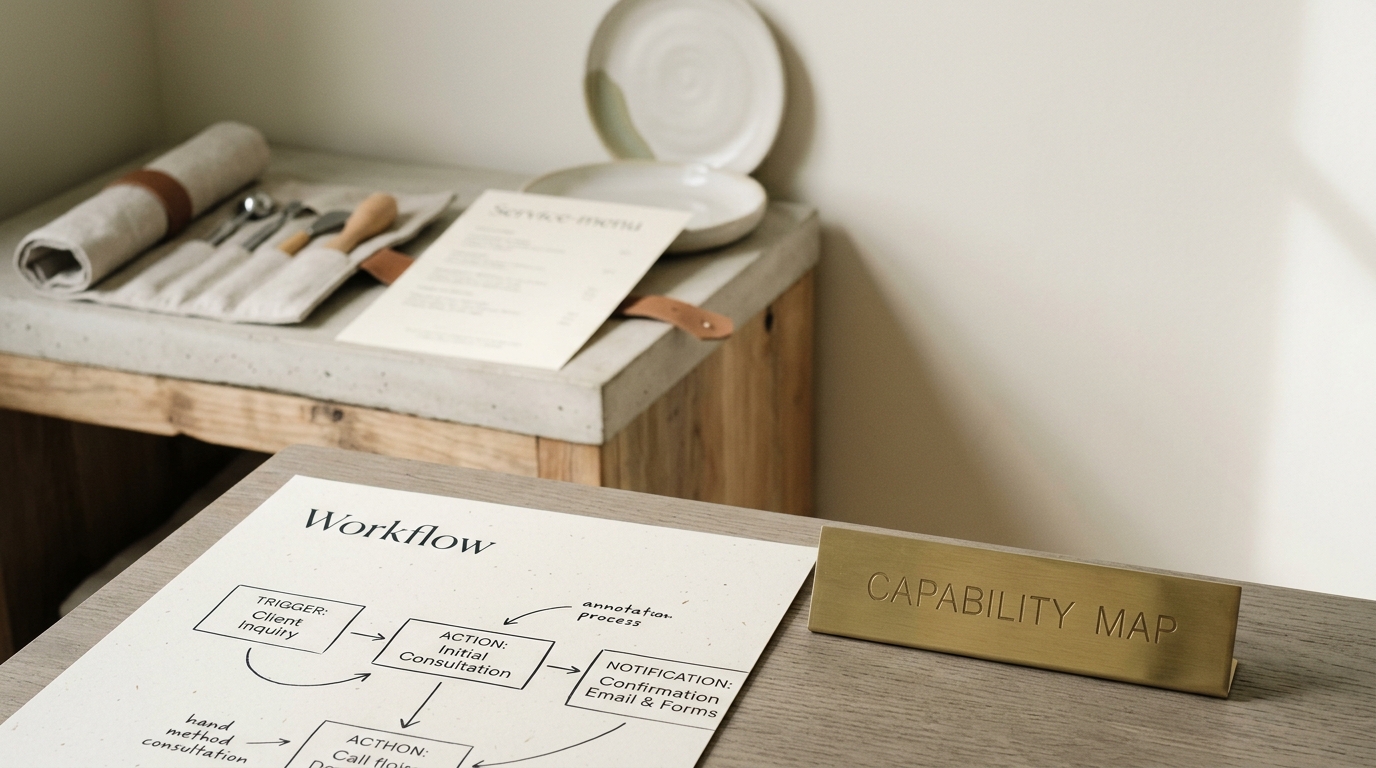
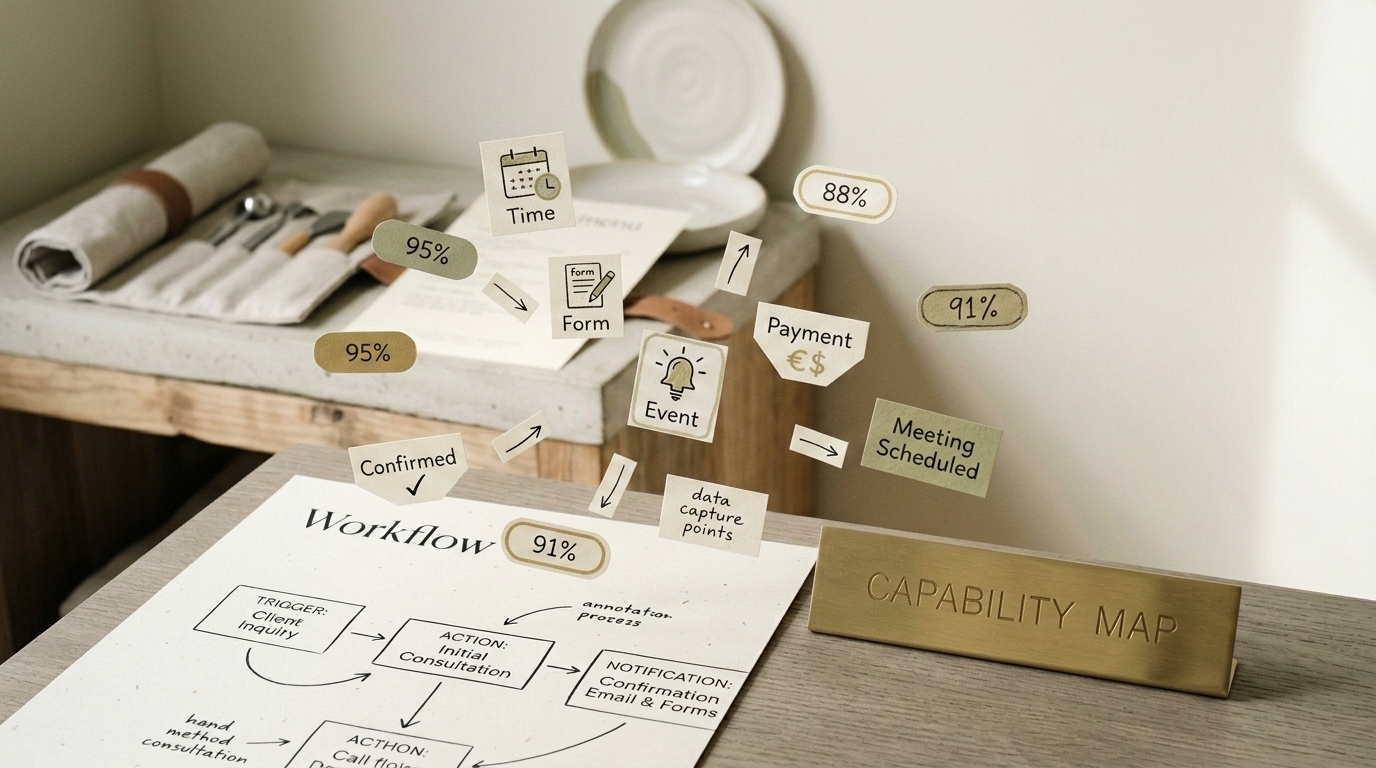
Workflow map (every trigger, condition, action)
Tuned to Beauty & Personal Care — the version we ship to operators in this vertical.
Lead-routing matrix with sub-5-minute escalation
Tuned to Beauty & Personal Care — the version we ship to operators in this vertical.
Live KPI dashboards refreshed nightly
Tuned to Beauty & Personal Care — the version we ship to operators in this vertical.
Operations runbook for every recurring process
Tuned to Beauty & Personal Care — the version we ship to operators in this vertical.
Quarterly forecast accuracy review
Tuned to Beauty & Personal Care — the version we ship to operators in this vertical.
SectionThe honest reframe most CRM agencies won't tell you
Most CRM agencies sell salons, barbershops and aesthetics clinics a HubSpot setup that was designed for a SaaS company in San Francisco. They build a generic pipeline — "New Enquiry, Booked, Showed Up, Lapsed" — and walk away. There is no rebooking-cycle automation, no deposit-and-reminder workflow, no stylist-routing on enquiries, no awareness that the booking platform itself is the CRM. The result is a salon paying £400 a month for a contact list while Fresha, Treatwell, Booksy or Phorest already holds the live customer record, the appointment history, the stylist preference, the deposit status and the rebooking trigger.
Beauty and personal-care operators run a fundamentally different business. The booking platform is the operating system. Hair clients rebook on a 4–8 week cycle. Nail clients run 2–4 weeks. Aesthetics clients move on treatment cycles tied to filler dissolution, toxin half-life and skin-cycle phases. Stylist preference is sticky — clients book the person, not the brand. Deposits and reminders cut no-shows by a third or more. ASA and MHRA rules govern what an aesthetics clinic can say in a paid post or an automated text. None of that fits a generic CRM template.
This playbook fixes the architecture, the rebooking automation, the deposit workflow, the stylist routing, the ASA-aware comms and the offline conversion sync. The booking platform stops being a glorified diary. It becomes the revenue engine. Read it, run it yourself, or have us ship it on retainer — the canon is the same.
SectionThe eight-point audit we run on day one
Score your own setup red / amber / green this week. Three or more reds means the foundation is broken — fix that before you spend another pound on Meta Ads or onboard another stylist.
- Industry-specific booking-CRM choice. Fresha is free at point of use, scales well, has the strongest marketplace pull and ships rebooking automation natively — but its payment-processing economics need scrutinising at volume. Treatwell wins on London / urban marketplace traffic and customer acquisition but takes a meaningful commission on marketplace-sourced bookings. Booksy is the barbershop and beauty-room champion in the independent space — leaner, faster, with strong stylist-level booking pages and waitlist. Phorest is the salon-software incumbent with the deepest CRM, retail-stock and reporting layer but a heavier price tag and a steeper learning curve. The wrong choice is a four-figure mistake compounding quarterly. HubSpot or Pipedrive bolted on top of any of these is a duplication tax — the booking platform is the CRM.
- Rebooking-cycle automation. Hair colour clients should be prompted to rebook at week 5 of an 8-week cycle. Cut-only clients at week 3 of a 5-week cycle. Nail clients at week 2 of a 3-week cycle. Aesthetics clients on a treatment-specific cycle — toxin at 12 weeks, hyaluronic dermal filler at 6–9 months, skin treatments on the published clinical cycle. The booking platform either runs that cycle automatically with a personalised SMS / email / push, or it does not — and if it does not, a third of your repeat revenue is leaking on the floor.
- Deposit and appointment-reminder workflow. A taken deposit cuts no-shows by 40–60%. A 48-hour reminder cuts no-shows another 15–25% on top of that. Yet most independent salons still take no deposit and rely on a 24-hour text the platform sends in the wrong tone. The deposit policy, the reminder cadence, the cancellation window and the rebook-on-cancel flow are the four levers that move chair-utilisation by 5–15 percentage points.
- Stylist-routing on inbound enquiries. A new enquiry that mentions balayage, micro-needling, dermal filler or barbering should land with the right stylist or practitioner — not in a generic salon inbox where the front-desk allocates by gut feel hours later. Stylist-level booking pages, skill-tagged availability and routing rules on inbound DMs and form-fills mean the right specialist owns the conversation from minute one. Wrong-stylist quotes and "we'll get back to you" delays are the two biggest enquiry-leak points in independent beauty.
- ASA-compliant aesthetic comms automation. Aesthetics clinics operate under ASA-CAP / MHRA rules — no targeting under-18s on Meta, no prescription-only product names in public comms (botulinum toxin, prescription-strength tretinoin), no before-and-after claims that are not properly evidenced, no superlatives without substantiation. The CRM and the marketing automation either know that — and gate the comms accordingly — or you carry the regulatory and reputational risk every time a sequence fires.
- Review-request automation post-appointment. Google reviews drive local SEO. A post-appointment automated request, sent at the right moment in the right tone, lifts review volume 3–5x in 90 days. Most salons either send no automated review request or send the platform's generic version with no link, no follow-up and no tone match.
- Offline conversion sync to ad platforms. When a booking moves from "enquiry" to "appointment paid for," that conversion event needs to fire back to Meta and Google with revenue value attached. Without it, the algorithm bids on the cheapest form-fillers, not the £180-spend colour client who actually books. Most beauty operators are not configured for this. It is the single highest-leverage CRM-to-paid-media integration in the industry.
- Data-hygiene and GDPR consent on photo and treatment data. Before-and-after photos, treatment notes, consultation forms, allergy disclosures, prescription-only product records — all of it sits inside the CRM or the booking platform. GDPR consent for photo use, retention windows on treatment records, audit trail on who accessed what and when — most salons are one ICO complaint away from finding out their data hygiene is fiction. Save Face and BABTAC member clinics carry an additional accreditation expectation.
Three or more reds — fix the foundation before you commission new ad spend, hire another stylist, or launch the new treatment line.
SectionSix productised deliverables we ship per cycle
On a Foundation, Compound or Architect retainer, the same six outputs land in your portal each cycle. Industry-tuned, fixed scope, dated. Walk-away rights at every cycle boundary.
Booking-CRM stack architecture. A written decision and configured deployment of the right booking-CRM platform for your operation — Fresha, Treatwell, Booksy or Phorest — based on volume, sub-vertical mix (hair / nails / aesthetics / barbering), retail-stock requirement, marketplace dependence and price sensitivity. The platform is configured as the system of record — stylist profiles, service menu with accurate durations, deposit policies, cancellation windows, treatment-cycle tags and consent forms. Bolted-on generic CRMs are decommissioned. The duplication tax stops. Time to first signal: 14 days. Owned by you.
Rebooking-cycle automation. Each service in the menu is tagged with its rebooking cycle — 4 weeks, 6 weeks, 8 weeks, treatment-specific. The booking platform fires a personalised SMS, email or push at the right point in the cycle, with a one-tap rebook link to the same stylist. Lapsed-client win-back sequences fire at 1.5x and 2x the standard cycle. The dashboard shows rebook rate by stylist, by service and by cycle window. Rebook rate moves 8–18 points in the first quarter on most operations. Time to first signal: 21 days.
Deposit and reminder workflow. A documented deposit policy is implemented — flat fee, percentage or full prepayment depending on service value and no-show risk. The booking flow takes the deposit at booking. A 72-hour soft reminder, a 24-hour hard reminder and a 2-hour day-of confirmation fire automatically with the right tone and the right cancellation policy. The cancellation window is enforced. A waitlist auto-fills cancelled slots. No-show rate drops 40–60% inside the first month. Chair-utilisation moves 5–15 points across the quarter.
Stylist-routing automation. Stylist-level booking pages, skill-tagged availability and routing rules on inbound DMs and form-fills. A new enquiry mentioning balayage, lash extensions, dermal filler or beard sculpt lands with the right specialist on first touch — name on it, photo on it, response time inside business hours measured in minutes not hours. Front-desk allocation by gut feel ends. Specialist conversion rate rises. Stylist commission disputes fall because the trail is clean. Time to first signal: 14 days.
ASA-aware aesthetic comms automation. For aesthetics clinics, every automated sequence — pre-appointment, post-appointment, lapsed, win-back, referral, retail upsell — is reviewed and gated against ASA-CAP and MHRA rules. No prescription-only product names in public comms. No under-18 targeting. No unsubstantiated superlatives. No before-and-after claims that are not properly evidenced and consented. Save Face and BABTAC alignment where applicable. The clinic principal signs off the sequence library once and the automation runs without weekly compliance fire-drills.
Offline conversion sync to ad platforms. Paid bookings and high-value retail purchases fire back to Meta and Google as conversion events with revenue value attached. The Meta Click ID and Google Click ID are captured at first touch — DM, form-fill or marketplace landing — and posted back when the booking is paid for. The algorithm starts bidding on real customers within 30–60 days. CPL goes up, CAC goes down, junk-enquiry share drops 30–50%. The reporting finally tells the truth about which campaign pays the chair-rent.
SectionWhat to do this week
Three actions, ranked by leverage. Same first three steps we ship in week one of a Foundation retainer for a salon, barbershop or clinic.
- Audit your booking-CRM stack. Owner: salon manager or owner. Time: 1 hour. Open Fresha / Treatwell / Booksy / Phorest. Open whatever generic CRM is bolted alongside it, if any. Count how many places a client record lives. If the answer is more than one, the duplication tax is your highest-leverage fix. The booking platform should be the system of record and everything else should sync from it or be retired.
- Run a 30-day rebooking-rate audit. Owner: owner or front-desk lead. Time: 30 minutes. Pull your last 100 appointments. Count how many rebooked inside the right cycle window — 6 weeks for hair colour, 3 weeks for nails, treatment-specific for aesthetics. If the rebook rate is under 50%, your rebooking automation is broken or absent. That is six-figure annual revenue leaking on the floor in any decent-sized salon.
- Decide DIY, DWY or DFY for the next 90 days. Owner: owner. Time: 30-min discovery call. We will confirm the right way in writing within two business days. See the three ways.
SectionFive questions beauty operators ask us about CRM and automation
Fresha vs Treatwell vs Booksy vs Phorest — which one for an independent salon? For independent salons under five chairs with mixed hair and beauty, Fresha is usually the right answer in 2026 — strongest rebooking automation, free at point of use, marketplace pull, decent payments. Treatwell wins when you are in central London / a major city and the marketplace acquisition channel is the main growth lever — accept the commission, take the bookings. Booksy is the barbershop and single-room beauty champion — leaner, faster, stylist-level pages that work for solo practitioners and small teams. Phorest is the right answer at scale — multi-location operations, serious retail stock, deep reporting, brand-led customer experience — and worth the price tag once you are above eight chairs or running multiple sites. The wrong platform is a four-figure error compounding quarterly. Get this decision right before you commit.
Does rebooking-cycle automation actually pay for itself? Yes, and faster than most salon owners expect. The rebook-rate uplift is typically 8–18 percentage points in the first quarter on a properly tagged service menu. On a salon turning over £30,000 a month, an 8-point uplift on rebook rate is roughly £2,400 a month in retained revenue at zero acquisition cost. The automation fee is paid back inside the first month. The compounding effect over a year is six figures of recovered revenue on a mid-sized operation. Lapsed-client win-back sequences add another layer on top. Payback is week one of meaningful operation.
What is the actual revenue impact of a deposit-and-reminder workflow? Conservative: 40–60% drop in no-show rate within the first month. The mechanism is simple — a taken deposit and a properly cadenced reminder shifts the appointment from "thing I might do" to "thing I have committed to." Chair-utilisation moves 5–15 percentage points in the first quarter. On a stylist billing £4,500 a month gross, recovering even three no-shows a week is £600+ a week in retained revenue per chair. The waitlist auto-fill compounds the effect. Most independent operations are leaving five-figure annual revenue on the table per chair by not running a deposit policy.
How do we run automated comms for an aesthetics clinic without falling foul of ASA or MHRA? Three principles. One — never use prescription-only product names in public-facing comms; talk about the treatment outcome and the consultation, not the brand or the molecule. Two — never target under-18s on Meta or Google for aesthetic procedures and gate the booking flow with an age-verification step. Three — every before-and-after claim must be evidenced, consented and substantiated; the easier path is to lead with practitioner credentials, treatment philosophy and consultation depth rather than transformation imagery. Save Face and BABTAC accreditation cues lift trust and align with ASA expectations. Sign the sequence library off with the clinic principal once, run quarterly compliance reviews, and the automation runs without weekly fire-drills. NHBF, BABTAC and Habia guidance is the working canon for the broader sector.
Can we run this ourselves with the playbook plus £750 audit? Yes — most of the architecture-and-fix list above is achievable in-house if you have a salon manager who owns the booking platform, a marketing-savvy team member who will write and sign off automated comms, and an owner who will enforce the deposit policy with the team. The £750 audit gives you a written red / amber / green scoring across the eight audit points, with named-owner and dated next steps. If you sign for DWY or DFY within 30 days, the audit fee credits against the first cycle.
SectionWhere to go from here
If you want this shipped end-to-end on a productised retainer, book a 30-minute discovery call. Tailored proposal in writing within two business days.
If you would rather have a senior practitioner reviewing your team's work each week, the coaching plans start at £750/month with rolling cycles and walk-away rights. If you have a hard deadline — a new-location launch, a peak-season scaling push, a platform migration that needs landing inside ten working days — the two-week embedded sprint lands a senior practitioner inside your tools for ten working days at £3,000 fixed.
Or run it yourself. Read this playbook end to end, run the eight-point audit, ship one deliverable a month for six months. Twice-quarterly office hours are open to anyone using the playbooks — bring your work, get reviewed, no charge.
Get Automation & CRM for Beauty & Personal Care.
A focused, no-fluff playbook covering the audit, the deliverables, the success signals and the cadence we use when we run this combination for clients. Beauty & Personal Care-specific from the first page to the last.
No spam. One playbook, one follow-up email a week later asking what landed and what didn’t. Unsubscribe in one click.
Where the playbook ends and the engagement begins.
The framework, free
- The eight-point audit baseline so you can score your own site this week
- The six productised deliverables we ship per cycle, named and explained
- The 30/60/90 fix roadmap so you can plan internal capacity
- The three-way model (DIY / DWY / DFY) and price bands
- The success metrics we track and the time-to-signal canon
- The industry-specific regulators, sub-verticals and trust signals
What requires the call
- Named-client case studies with revenue numbers (NDA-protected)
- Our internal tooling stack and platform vendors (trade-secret)
- The proprietary scoring rubric we use to triage problems
- Specific commercial terms beyond published price bands
- Direct introductions to our partner network
- The post-engagement playbook revisions we ship per cycle
Adjacent combinations operators in this vertical also read.
Automation & CRM for Personal Brands & Creators
A focused playbook for Personal Brands & Creators operators running Automation & CRM.
Open the playbook → PLAYBOOKAutomation & CRM for Automotive
A focused playbook for Automotive operators running Automation & CRM.
Open the playbook → PLAYBOOKContent & Editorial for Beauty & Personal Care
A focused playbook for Beauty & Personal Care operators running Content & Editorial.
Open the playbook → PLAYBOOKSocial Media Management for Beauty & Personal Care
A focused playbook for Beauty & Personal Care operators running Social Media Management.
Open the playbook →Start your Automation & CRM for Beauty & Personal Care programme.
Thirty-minute discovery call, free, no commitment. We’ll send a tailored band before the call and a written proposal within two business days.