
Automation & CRM for Personal Brands & Creators — The Practitioner’s Playbook.
A focused playbook for Personal Brands & Creators operators running Automation & CRM. A satellite of social channels that monetises nothing is a hobby, not a brand. Owned domain + email list is what compounds. Sponsorship, product, course and audience monetisation each have their own playbook, but operators usually run only one.
Automation & CRM for Personal Brands & Creators is its own discipline.
Six things this playbook covers, end to end.
Pipeline architecture with stages, criteria and owners
Tuned to Personal Brands & Creators — the version we ship to operators in this vertical.
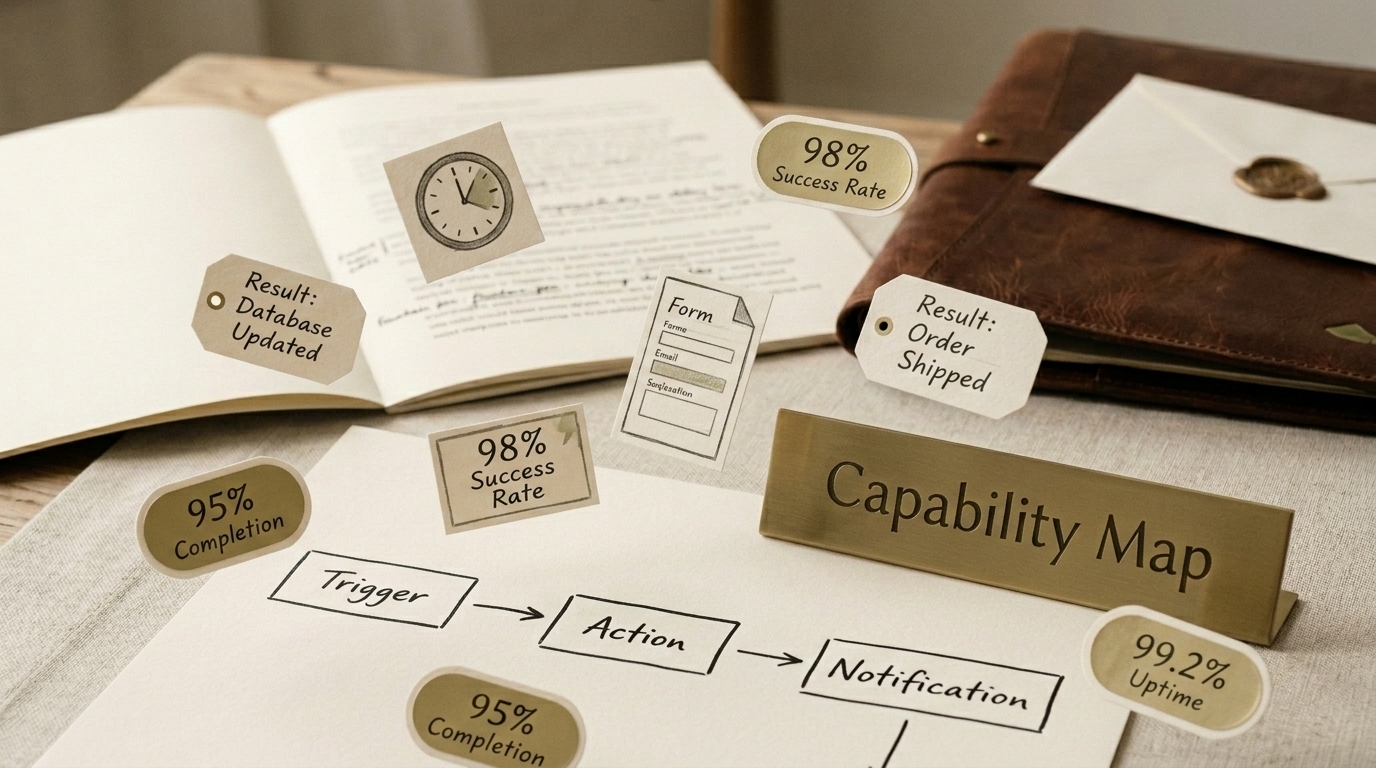
Workflow map (every trigger, condition, action)
Tuned to Personal Brands & Creators — the version we ship to operators in this vertical.
Lead-routing matrix with sub-5-minute escalation
Tuned to Personal Brands & Creators — the version we ship to operators in this vertical.
Live KPI dashboards refreshed nightly
Tuned to Personal Brands & Creators — the version we ship to operators in this vertical.
Operations runbook for every recurring process
Tuned to Personal Brands & Creators — the version we ship to operators in this vertical.
Quarterly forecast accuracy review
Tuned to Personal Brands & Creators — the version we ship to operators in this vertical.
SectionThe honest reframe most CRM agencies won't tell you
Most CRM agencies sell coaches, speakers, authors, podcasters and course creators a HubSpot or Salesforce stack that was designed for a B2B SaaS company with a sales team. They map the audience as a single contact list, the products as a single funnel, and the pipeline as "Lead, MQL, SQL, Won, Lost." None of that fits a personal brand. The CRM becomes an expensive subscription nobody opens, the email list rots, and the launch numbers get blamed on the audience instead of the architecture.
Personal brands run on a creator stack — Kajabi, ConvertKit, Beehiiv, Substack, Podia, Circle, Skool — that was built for the actual sales motion: free audience, paid reader, course buyer, mastermind member, one-to-one client. That stack already does ninety per cent of what a generic CRM forces you to rebuild from scratch. The job is not to bolt HubSpot on top. The job is to architect the creator stack you already pay for, segment the audience by buyer-stage, sequence the multi-product ladder, screen the discovery calls, automate the affiliate cross-promotion, and make sure ASA disclosure is on every automated endorsement comm before the regulator notices.
This playbook fixes the architecture, the segmentation, the sequencing, the screening and the compliance. The list stops being a number on a dashboard. It becomes the operating system the brand monetises against. Read it, run it yourself, or have it shipped on retainer — the canon is the same.
SectionThe eight-point audit we run on day one
Score your own stack red, amber or green this week. Three or more reds means the foundation is broken — fix that before you launch another product, run another ad campaign, or pay another VA to send broadcasts.
- Creator-stack fit. Kajabi for an all-in-one course-plus-community-plus-email setup, billed against revenue tier. ConvertKit (Kit) for email-first creators with tagging-and-automation depth. Beehiiv for newsletter monetisation with paid-tier and ad-network economics built in. Substack for writers who want network effects but accept the platform tax and the export friction. Podia and Teachable for course-led businesses without Kajabi's price point. Circle and Skool for community-led brands where the conversation is the product. The wrong stack is a four-figure monthly mistake compounding into lost compounding — moving 8,000 subscribers between platforms because the choice was wrong is a six-week distraction.
- Audience-CRM segmentation by buyer-stage. Every contact carries a stage tag — audience (follower, no email), reader (email, no purchase), buyer (one product), repeat buyer (two-plus), mastermind or one-to-one. Each stage gets different content cadence, different offers, different unsubscribe thresholds. One list with one broadcast is the most common error and the most expensive — it under-monetises buyers and burns out audience.
- Multi-product sequencing automation. A reader who buys the £47 mini-course should see the £497 signature programme inside fourteen days, the £1,997 cohort inside ninety, and the £15,000 mastermind invitation when behavioural signals fire — not a generic newsletter. The ladder is automated, behaviour-triggered and revenue-instrumented. Most personal brands have the products and the audience and no ladder.
- Discovery-call application and screening flow. Coaches and consultants giving away a free call to anyone with a calendar link are bleeding hours. The screening flow is an application form with qualifying fields (revenue, role, problem, budget signal, timeline), an automatic disqualification rule for tyre-kickers, a confirmation sequence with pre-call homework, and a no-show recovery sequence. Calendar minutes are the highest-leverage resource — gate them.
- Affiliate and partner cross-promotion automation. Two creators with overlapping audiences can swap newsletter mentions, bundle launches, podcast cross-promos and JV affiliate links — but only if the tracking, the disclosure, the payout and the hand-off sequences are codified. Most "partnerships" are a one-off Zoom call with no follow-through. Automated cross-promo with tagging and revenue attribution turns one-off swaps into a recurring channel.
- ASA disclosure on automated endorsement comms. UK Advertising Standards Authority rules apply to any automated endorsement, affiliate-link broadcast or sponsored email — it must be marked as advertising, the relationship must be disclosed and the disclosure must be prominent, not buried in the footer. CMA digital-markets enforcement has tightened. Automated sequences that recommend partner products without disclosure are non-compliant by default — fix it before the regulator or a competitor reports you.
- Offline conversion sync. Closed sales from the discovery-call pipeline, the mastermind onboarding, the podcast-driven course purchase — all need to fire conversion events back to Meta, Google and any ad platform that drove the audience. Without offline conversion sync, the algorithm bids on cheap clicks instead of buyers, ad spend underperforms, and the dashboard lies about which campaign is paying for the team.
- Community and membership platform integration. A Circle, Skool, Discord or Mighty Networks community must integrate with the email and CRM stack — joins fire welcome sequences, churn fires retention sequences, engagement signals feed segmentation, and member-only product launches reach the right cohort. Most communities sit isolated from the email list, which is why renewal rates are 40% instead of 70%.
Three or more reds — fix the foundation before you commission a new launch, hire another VA, or pay for another funnel build.
SectionSix productised deliverables we ship per cycle
On a Foundation, Compound or Architect retainer, the same six outputs land in your portal each cycle. Industry-tuned, fixed scope, dated. Walk-away rights at every cycle boundary.
Creator-stack architecture. A written, decision-grade architecture covering platform choice (Kajabi vs ConvertKit vs Beehiiv vs Substack vs Podia vs Circle vs Skool), tagging schema, automation rule set, integration map and migration plan if you are on the wrong stack. Each platform's price-tier crossover, feature-gate and lock-in friction is mapped against your specific business — coach, course creator, podcaster, author, speaker. The creator stack stops being whatever the last consultant set up and becomes a deliberate architecture you can defend to your accountant. Time to first signal: 14 days.
Audience-CRM segmentation by buyer-stage. A tagging and segmentation schema across audience, reader, buyer, repeat buyer and mastermind, with rules for stage progression, dormancy and exit. The broadcast cadence is differentiated — readers get weekly, buyers get a separate monthly nurture, repeat buyers get an inner-circle drip, mastermind candidates get hand-curated outreach. Open rates and click rates rise within thirty days because the right people are getting the right content. Unsubscribe rates often drop. Time to first signal: 21 days. Owned by you.
Multi-product sequencing automation. A behaviour-triggered ladder from lead magnet to mini-product to signature programme to cohort to mastermind, with rules for upsell timing, downsell branches, and dormancy resequencing. Each step has a written hypothesis, a tracked conversion event and a revenue-per-subscriber metric. Personal brands with three to seven products typically see thirty to fifty per cent revenue lift inside one quarter not because the products changed but because the ladder finally exists.
Discovery-call application and screening flow. An application form with qualifying fields, automatic disqualification rules, a confirmation sequence with pre-call homework, a no-show recovery sequence and a post-call follow-up automation. Calendar load drops. Show-up rates rise. Close rates rise because the calls that happen are with qualified prospects. The founder stops giving away three hours a week to people who were never going to buy. Time to first signal: 21 days.
Affiliate and partner automation. A codified system for swap mentions, bundle launches, podcast cross-promos and JV affiliate runs — with tracking links, attribution rules, ASA-compliant disclosure templates, payout schedules and hand-off sequences. The partnership pipeline becomes a tracked channel with a revenue line, not a series of friendly intros. Repeatable cross-promotions add a fifteen to twenty-five per cent topline lift in the second half of the year for most established personal brands.
Community and membership integration. Two-way sync between your community platform (Circle, Skool, Discord, Mighty Networks) and the email and CRM stack. Joins fire welcome sequences. Engagement signals feed segmentation. Churn risk fires retention sequences. Member-only product launches target the right cohort. The community stops being a silo and becomes the highest-engagement segment in the broadcast schedule.
SectionWhat to do this week
Three actions, ranked by leverage. Same first three steps we ship in week one of a Foundation retainer for a personal brand.
- Audit your tagging schema. Owner: founder or operations lead. Time: 1 hour. Open your email platform and your community platform. Count the tags. If contacts are not tagged by buyer-stage (audience / reader / buyer / repeat buyer / mastermind), that is the highest-leverage fix. The segmentation decision is what makes every subsequent automation possible.
- Time your discovery-call screening. Owner: founder. Time: 30 minutes. Submit a test application. Time how long until you know whether it is a qualified call or a tyre-kicker — and how many fields you actually need to make that call. If the answer is "I open the form on the call itself," your screening is broken. Most brands find they are running unqualified discovery calls and blaming the close rate.
- Decide DIY, DWY or DFY for the next 90 days. Owner: founder. Time: 30-min discovery call. We will confirm the right way in writing within two business days. See the three ways.
SectionFive questions personal brands ask us about CRM and automation
Kajabi vs ConvertKit vs Beehiiv vs Substack vs Podia — which one for a personal brand? Kajabi if you are running courses, communities and email from one stack and your revenue tier justifies the price floor — typically £100k-plus annual. ConvertKit (Kit) wins for email-first creators who want serious tagging and automation depth without the all-in-one premium and prefer to keep courses and community on best-of-breed tools. Beehiiv is the right choice for newsletter-led brands monetising via paid tiers, ad networks and referral mechanics — the economics are built into the platform. Substack works for writers who want network effects but accept the platform tax (10%) and the export friction when you outgrow it. Podia and Teachable are credible course-first choices below Kajabi's price point. The wrong choice is a four-figure monthly compounding mistake — get this decision right before you migrate eight thousand subscribers for the second time.
Does buyer-stage segmentation actually lift revenue? Yes, and faster than most creators expect. The mechanism is simple — when buyers stop receiving the same broadcast as audience-only contacts, repeat buyers start hearing offers calibrated to their lifetime value, and mastermind candidates get hand-curated outreach instead of generic launch emails, the revenue per subscriber rises measurably. Open rates and click rates climb within thirty days because the right people are getting the right content. Unsubscribe rates often drop because audience-tier contacts stop receiving offers they cannot afford. A typical personal brand with five thousand subscribers and four products sees a twenty to forty per cent revenue lift in the first quarter purely from segmentation.
What is the actual revenue impact of multi-product sequencing? Conservative: thirty to fifty per cent revenue lift inside one quarter for a brand with three to seven products and an existing audience. The mechanism is that without sequencing, a reader who buys the £47 mini-course never sees the £497 signature programme — they get the same weekly newsletter as someone who has never bought. With sequencing, the £47 buyer enters a fourteen-day upsell window for the £497 programme, the £497 buyer enters a ninety-day window for the £1,997 cohort, and behavioural signals (engagement, replies, link clicks) trigger mastermind invitations. The revenue is already in the audience. The ladder unlocks it.
What does ASA disclosure actually require on automated endorsement comms? Automated emails, broadcasts and sequences that promote partner products, affiliate links or sponsored offers fall under UK Advertising Standards Authority rules. The disclosure must be clear, prominent and upfront — "Ad" or "Advertisement" at the top, not buried in a footer. The commercial relationship must be disclosed (affiliate, sponsorship, paid promotion). CAP Code rules and the CMA's Digital Markets, Competition and Consumers Act 2024 enforcement have tightened the standard — vague "thanks to our friends at..." language no longer covers it. Automated sequences that recommend partner products without disclosure are non-compliant by default. The fix is template-level — bake disclosure into the email template rather than relying on the founder to remember on each broadcast.
Can we run this ourselves with the playbook plus £750 audit? Yes — most of the architecture-and-fix list above is achievable in-house if you have an operations lead who owns the email stack, a VA who can implement automations and a founder who will actually adopt the new segmentation. The £750 audit gives you a written red / amber / green scoring across the eight audit points, with named-owner and dated next steps. If you sign for DWY or DFY within 30 days, the audit fee credits against the first cycle. NCNDA in place for any client material reviewed in the audit.
SectionWhere to go from here
If you want this shipped end-to-end on a productised retainer, book a 30-minute discovery call. Tailored proposal in writing within two business days.
If you would rather have a senior practitioner reviewing your team's work each week, the coaching plans start at £750/month with rolling cycles and walk-away rights. If you have a hard deadline — a book launch landing in six weeks, a signature-framework rollout, a podcast-driven course launch that needs the funnel and the ladder live — the two-week embedded sprint lands a senior practitioner inside your tools for ten working days at £3,000 fixed.
Or run it yourself. Read this playbook end to end, run the eight-point audit, ship one deliverable a month for six months. Twice-quarterly office hours are open to anyone using the playbooks — bring your work, get reviewed, no charge.
Get Automation & CRM for Personal Brands & Creators.
A focused, no-fluff playbook covering the audit, the deliverables, the success signals and the cadence we use when we run this combination for clients. Personal Brands & Creators-specific from the first page to the last.
No spam. One playbook, one follow-up email a week later asking what landed and what didn’t. Unsubscribe in one click.
Where the playbook ends and the engagement begins.
The framework, free
- The eight-point audit baseline so you can score your own site this week
- The six productised deliverables we ship per cycle, named and explained
- The 30/60/90 fix roadmap so you can plan internal capacity
- The three-way model (DIY / DWY / DFY) and price bands
- The success metrics we track and the time-to-signal canon
- The industry-specific regulators, sub-verticals and trust signals
What requires the call
- Named-client case studies with revenue numbers (NDA-protected)
- Our internal tooling stack and platform vendors (trade-secret)
- The proprietary scoring rubric we use to triage problems
- Specific commercial terms beyond published price bands
- Direct introductions to our partner network
- The post-engagement playbook revisions we ship per cycle
Adjacent combinations operators in this vertical also read.
Automation & CRM for Trades & Home Services
A focused playbook for Trades & Home Services operators running Automation & CRM.
Open the playbook → PLAYBOOKAutomation & CRM for Real Estate & Property
A focused playbook for Real Estate & Property operators running Automation & CRM.
Open the playbook → PLAYBOOKStrategy & Consultancy for Personal Brands & Creators
A focused playbook for Personal Brands & Creators operators running Strategy & Consultancy.
Open the playbook → PLAYBOOKSEO & Organic Growth for Personal Brands & Creators
A focused playbook for Personal Brands & Creators operators running SEO & Organic Growth.
Open the playbook →Start your Automation & CRM for Personal Brands & Creators programme.
Thirty-minute discovery call, free, no commitment. We’ll send a tailored band before the call and a written proposal within two business days.