Digital PR & Reputation for Personal Brands & Creators — The Practitioner’s Playbook.
A focused playbook for Personal Brands & Creators operators running Digital PR & Reputation. A satellite of social channels that monetises nothing is a hobby, not a brand. Owned domain + email list is what compounds. Sponsorship, product, course and audience monetisation each have their own playbook, but operators usually run only one.
Digital PR & Reputation for Personal Brands & Creators is its own discipline.
Six things this playbook covers, end to end.
Story bank with angles, data and quotes
Tuned to Personal Brands & Creators — the version we ship to operators in this vertical.
Targeted media list with named editors and beats
Tuned to Personal Brands & Creators — the version we ship to operators in this vertical.
Pitch templates per outlet with subject-line variants
Tuned to Personal Brands & Creators — the version we ship to operators in this vertical.
Outreach calendar with follow-up rules
Tuned to Personal Brands & Creators — the version we ship to operators in this vertical.
Backlink scorecard (domain rating + anchor variation)
Tuned to Personal Brands & Creators — the version we ship to operators in this vertical.
Reputation dashboard (review velocity, sentiment, branded search)
Tuned to Personal Brands & Creators — the version we ship to operators in this vertical.
SectionHonest reframe
Most PR agencies sell coaches, speakers, authors, podcasters, YouTubers, course creators, and consultants-as-product the same generic press distribution package they sell everyone else — a 600-word release, a wire blast, a clipping report stuffed with no-traffic syndication portals, and a £2,500 retainer that produces no podcast bookings, no book pre-orders, no course-launch lift, and no movement on the front page of your name in Google. Then they wonder why the creator economy has stopped buying traditional PR.
Personal-brand PR is its own discipline. The single highest-leverage backlink and audience engine you have is a podcast-guest programme — twelve to twenty pre-vetted shows in your niche, pitched in the right window, recorded in batches, with the resulting episodes pulled through into branded-SERP assets and your owned channels. PR agencies almost never run this lane because it does not bill like a wire spend. The other lanes they ignore: book and course launch press cycles timed to pre-order and cart-open windows; branded-SERP control through Wikipedia, About.me, LinkedIn, and namesake-domain assets so the first page of your name is not a hostage to one bad review or one out-of-context tweet from 2019; ASA-aware sponsorship and affiliate disclosure on every paid placement so you do not end up named in a Watchdog round-up; and a cancel-culture and online-mob crisis playbook ready to deploy on the day the screenshot lands, not the week after.
This playbook fixes all five lanes — outbound podcast and press, launch-cycle planning, branded-SERP defence, disclosure-clean sponsorship, and crisis response — and shows you how to run them in-house, with a coach, or on retainer.
SectionEight-point audit
Score each point red / amber / green this week.
- Podcast-guest programme — pipeline of 12-20 target shows per cycle. A live, ranked target list of at least twelve podcasts in your niche, scored on audience overlap, host reach, ad-supported vs subscriber-funded, episode shelf-life, and prior guest mix. Each show has a named producer or host, a pitched-or-not flag, a tailored angle, and a preferred booking window. This is the highest-leverage personal-brand PR engine you own. Most creators have a list of "ten podcasts I'd love to be on" written on a Notion page two years ago and never pitched. That is not a programme.
- Book / course launch press cycle planning. A 12-week pre-launch and 8-week post-launch press calendar mapped against your pre-order window, cart-open window, bonus-deadline windows, and final-call windows. Each phase has a headline angle, target podcast slots, target trade and consumer press, an embargoed-exclusive offer, and an ASA-clean affiliate brief for collaborators. Most launches discover PR in week three of pre-order, by which point the highest-leverage podcast windows have closed.
- Branded-SERP control — Wikipedia / LinkedIn / About.me / namesake assets. First page of your name in Google audited and owned. LinkedIn complete and ranking. About.me, namesake.com / .co.uk, a Wikipedia page where notability allows, a personal site on the namesake domain, claimed Crunchbase / IMDb / Goodreads / RoyaltyExchange / equivalents where relevant. Knowledge panel triggered. Image SERP curated. Most creators have one strong asset (the personal site) and seven weak ones, with a 2018 podcast appearance at position three.
- ASA-aware sponsorship and affiliate disclosure on press placements. Every paid placement, gifted product, affiliate link, and brand collaboration disclosed in line with ASA / CAP guidance —
#ad,#gifted, or#affiliatein the first three lines, on every platform, and in the press-release boilerplate. A written disclosure policy in your media kit. Most creators are one regulator round-up away from a Watchdog feature because the disclosure is buried, missing, or done in a colour that fails contrast on white. - HARO / Connectively expert-commentary monitoring. Daily-monitored inbox for HARO (Connectively), Help-A-B2B-Writer, Qwoted, ResponseSource, and X / LinkedIn editor calls. Response SLA under 4 hours during the working day. Each reply a 150-word answer with a named-expert quote, credentials line, and high-resolution headshot. For a personal brand, every accepted reply is a do-follow link from a domain authority of 60+ direct to your namesake site. Most creators do not monitor.
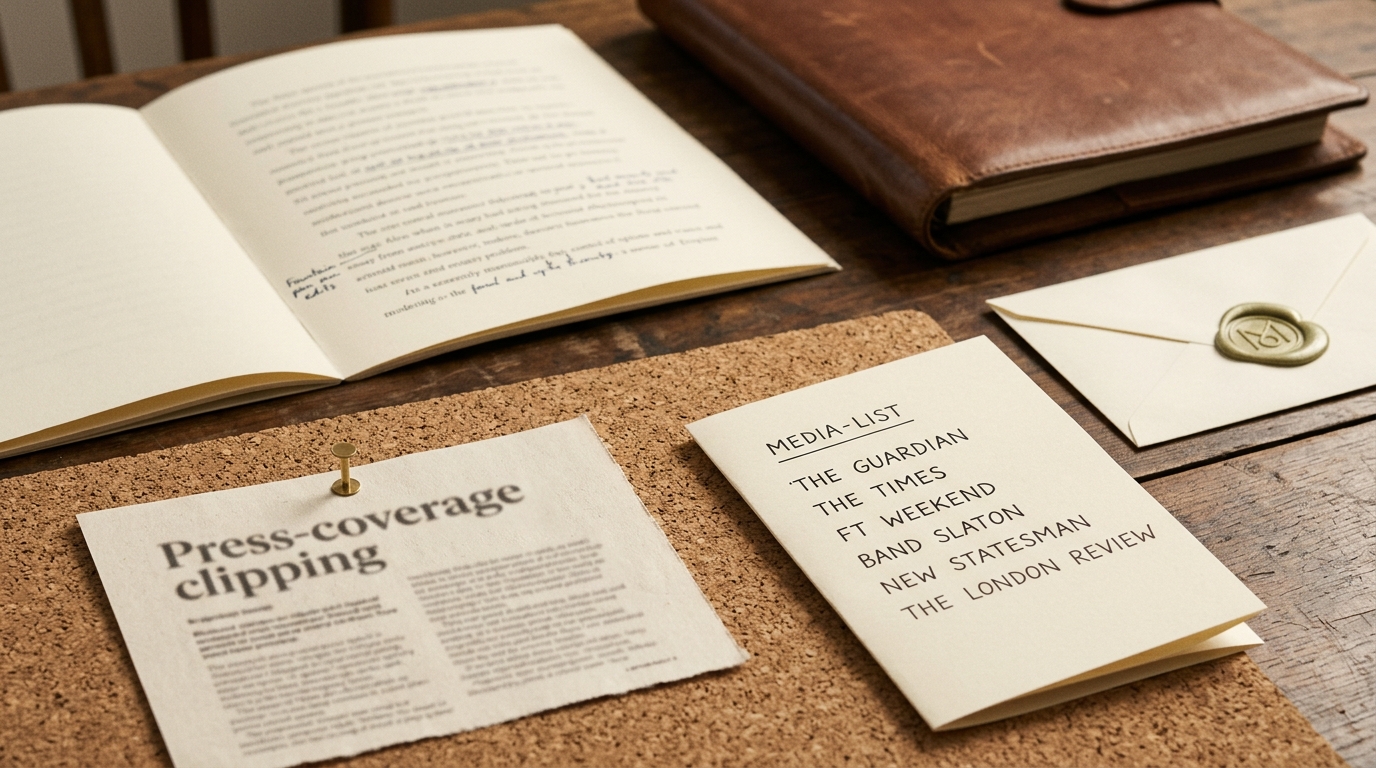
- Mainstream-media + tier-1 podcast targeting. A live tier-1 list of mainstream press desks (the Times, Guardian, Telegraph, FT, Sunday Times Style, Vogue Business, Esquire, GQ, Stylist) and tier-1 podcasts (Diary of a CEO, High Performance, Modern Wisdom, Deep Dive, The Tim Ferriss Show, Smart Passive Income, equivalents in your niche). Named-journalist or named-producer relationships. Pitch history. A clear answer to "why this person, why now" before any pitch leaves the building. Most creators pitch tier-1 with a generic press release and wonder why the silence.
- Cancel-culture / online-mob crisis playbook. A written 24-hour, 72-hour, and 7-day response framework for the day a clip goes viral, a screenshot is taken out of context, a former employee posts publicly, or a sponsor pulls. Pre-drafted holding statements. A named legal contact. A named platform-relations contact at Meta, X, TikTok, and YouTube. A pre-vetted PR crisis advisor on retainer or call-down. A do-not-respond list of accounts. Most creators have nothing on paper and are improvising on the day with the worst possible adrenaline.
- Affiliate / partner-collaboration press cross-promotion. A documented partner-press programme — joint guest swaps with peer creators, co-authored op-eds, joint product launches with co-ordinated press, mutual podcast slots, and reciprocal newsletter mentions. Disclosure compliant. Audience-overlap scored. Most creators do this ad-hoc, lose the leverage of co-ordination, and never cross-promote at the moment that matters — launch week.
Three or more reds — fix the foundation before any wire-distribution spend.
SectionSix deliverables
Podcast-guest programme. A 90-day cycle covering target-list research and ranking, named-host or named-producer pitches with tailored angles, batch-recording scheduling (six to ten recordings in two consecutive days where possible), episode promotion plan, and pull-through into branded-SERP assets and owned channels. Output: monthly placement report with episode reach estimates, do-follow link tally, namesake-search-volume movement, and book-or-course conversion attribution where measurable. Done well, a podcast-guest programme is the cheapest authority earn-back a personal brand will ever buy. Time to first signal: 30-45 days for first booking, 75-90 days for compounding inbound enquiry.
Book / course launch press cycle planning. A 20-week press cycle: 12 weeks pre-launch (positioning, angle, target lists, embargoed exclusives, podcast-guest scheduling into pre-order window) plus 8 weeks post-launch (reviews, bestseller-list pitches, secondary podcast wave, retrospective op-eds, paperback / cohort-two press if applicable). Each phase mapped to pre-order, cart-open, bonus-deadline, and final-call windows so the press lands when the buyer is making the decision, not three weeks early or three weeks late. Output: weekly cycle dashboard, press-coverage ledger, pre-order or cart-open attribution where the data supports it. Time to first signal: 14-21 days from cycle start to first confirmed press hit.
Branded-SERP control + asset claim. A page-one-of-your-name audit, gap analysis, and asset claim sweep. LinkedIn, About.me, namesake-domain personal site, Crunchbase / Goodreads / IMDb / equivalents, Wikipedia where notability allows, image-SERP curation, knowledge-panel trigger pathway, schema mark-up on the personal site, and Google Search Console verified for the namesake domain. Negative-asset displacement plan for any 2018-2022 placement that is now off-message. Output: branded-SERP dashboard tracking each of the top-twenty SERP positions monthly, with action and ownership against each one.
ASA-compliant sponsorship press. A written disclosure policy aligned with ASA / CAP guidance, integrated into your media kit, contract templates, and press-release boilerplate. Each paid placement, gifted product, and affiliate link tagged with #ad, #gifted, or #affiliate in the first three lines on every platform, in the right contrast, and on the right edit pass. A monthly compliance audit across the last 30 days of public posts and press placements. Output: disclosure policy document, audited compliance log, and a templated brief for any paid collaborator carrying your link or product.
Mainstream-media + tier-1 podcast targeting. A six-month outreach programme into named mainstream-media desks (the Times, Guardian, Telegraph, FT, Sunday Times Style, Vogue Business, Esquire, GQ) and tier-1 podcasts in your niche. Named-journalist or named-producer pitches, beat-aligned angles, exclusives where appropriate, and follow-ups at 7 and 14 days. Output: monthly placement-tracker with reach, link metrics, and quote-pull-through. Tier-1 placements compound — one Diary of a CEO or Times feature is worth a year of mid-tier press for inbound credibility. Time to first signal: 60-90 days for first tier-1 placement, longer where notability needs to be built first.
Cancel-culture crisis playbook. A written 24-hour, 72-hour, and 7-day response framework, with pre-drafted holding statements for the four most likely scenarios in your niche (out-of-context clip, former-employee statement, sponsor pull, platform suspension). Named legal contact, platform-relations contacts at Meta, X, TikTok, YouTube, a pre-vetted PR crisis advisor on call-down, and a do-not-respond list. Quarterly tabletop exercise. Output: living crisis playbook document, contact card, and a 90-minute drill recording reviewed annually. The playbook is not optional for any creator north of mid-six-figure annual revenue.
SectionWhat to do this week
Three actions, ranked by leverage.
- Audit page one of your name in Google. Owner: founder. Time: 30 minutes. Search your full name in an incognito window from a UK IP. Screenshot the top twenty positions. Mark each as owned (green), neutral (amber), or off-message (red). Note any unclaimed assets — About.me, Crunchbase, Goodreads, namesake domain, LinkedIn missing a section. If anything red is in the top ten, that is the first thing to fix.
- Build a 20-podcast target list for the next cycle. Owner: founder or PR lead. Time: 60 minutes. Open Listen Notes or Podchaser. Pull twenty shows in your niche scored on audience overlap, host reach, episode shelf-life, and prior guest mix. Add the named host or named producer for each. Rank them. The top ten is your next-cycle pitch list. Most creators have never written this list down.
- Decide DIY, DWY or DFY for the next 90 days. Owner: founder. See the three ways.
SectionFive questions
What's the realistic ROI on a podcast-guest programme for a creator doing £200k-£2m a year? Cost-per-qualified-lead from a structured podcast-guest programme settles in the £15-50 range once a 90-day cycle is running, depending on niche and audience overlap. A meaningful step below paid social at the same revenue band, and the audience quality is materially higher because it arrives via a trusted host. The compounding signal is link equity into your namesake domain — every show notes page is typically a do-follow backlink from a domain that already has audience trust, which moves branded-search volume on your name and lifts organic ranking on every commercial term you sell against. Twelve-month payback most creators see is in the 5-9x range from podcast-attributed leads alone, before you count branded-SERP uplift, book pre-orders, or course-launch waitlist growth.
How early should I start press for a book or course launch? Twelve weeks pre-launch is the inside edge. Tier-1 podcasts book six to twelve weeks ahead, broadsheet feature desks plan four to eight weeks ahead, and the highest-leverage podcast slots in your niche may already be holding their pre-launch slot for somebody else if you arrive eight weeks out. Your pre-order window and cart-open window are the two non-negotiable peaks — every other press hit is sequenced to land buyers into one of those windows. The mistake most creators make is starting at week six, by which point the tier-1 lane has closed and the press cycle becomes a mid-tier scramble that lands buyers after the bonus deadlines.
My name's first page has a 2019 placement I regret. How do I clean it up? Displacement, not deletion. Google rarely removes content, and right-to-be-forgotten requests are slow and uncertain. The faster pathway is to publish ten pieces of high-authority content under your name that rank above the 2019 placement — a Wikipedia page if notability allows, a refreshed namesake-domain personal site with schema, a strong LinkedIn, About.me, Crunchbase / Goodreads / IMDb / equivalents, three or four high-DR podcast appearances pulled through into the show notes you can rank for, and one or two op-eds in named publications. Done over six months, the 2019 placement falls to page two. Page two is functionally invisible — under 1% of buyers click through.
A clip of mine has been taken out of context and is going viral. What do I do in the first 24 hours? Three actions in the first six hours, in this order. First, do not respond on the platform where the clip is going viral. Instinct is to defend; defending feeds the algorithm. Second, open the crisis playbook, identify which of your four pre-drafted scenarios this fits, brief your legal contact, and brief your platform-relations contact at the host platform if escalation is appropriate. Third, draft a single holding statement for your owned channels (newsletter or website), short, factual, no defensiveness, no humour, no apology that can be clipped further. Decide in the next eighteen hours whether to issue a longer response, and if so, place it in a tier-1 long-form interview where you control the framing, not in a thread on the platform that is amplifying the clip. Most creators get this wrong by responding within the first hour, on the same platform, with the wrong tone. The playbook exists so you do not improvise that decision under adrenaline.
Can we run this ourselves with the playbook plus the £750 audit? Yes. Podcast-guest pitching, branded-SERP cleanup, HARO monitoring, ASA disclosure compliance, and partner-press cross-promotion are all achievable in-house with a marketing manager or executive assistant spending one day a week on PR, plus the founder spending two hours a week on host-facing pitches and recordings. The £750 audit gives you a written red/amber/green of all eight points, a 20-show ranked podcast target list with named hosts or producers and tailored angles, a branded-SERP top-twenty audit with displacement plan, the ASA disclosure policy template, the cancel-culture crisis playbook scaffolding with the four pre-drafted holding statements, and the monthly reporting dashboard format. Credit toward first cycle if you sign for DWY or DFY within 30 days.
SectionWhere to go from here
If you want this shipped end-to-end on a productised retainer, book a 30-minute discovery call.
If you'd rather have a senior practitioner reviewing your podcast pitch list, branded-SERP work, disclosure compliance, and crisis playbook each week, the coaching plans start at £750/month. If you have a hard deadline — a book launch eight weeks out, a course cart-open in six weeks, or a reputation rebuild after a public incident — the two-week embedded sprint lands a senior practitioner in your account for ten working days at £3,000 fixed, with the press cycle plan, podcast target list, and crisis playbook running before the window closes.
Or run it yourself. Eight-point audit + one deliverable a month + twice-quarterly office hours.
Get Digital PR & Reputation for Personal Brands & Creators.
A focused, no-fluff playbook covering the audit, the deliverables, the success signals and the cadence we use when we run this combination for clients. Personal Brands & Creators-specific from the first page to the last.
No spam. One playbook, one follow-up email a week later asking what landed and what didn’t. Unsubscribe in one click.
Where the playbook ends and the engagement begins.
The framework, free
- The eight-point audit baseline so you can score your own site this week
- The six productised deliverables we ship per cycle, named and explained
- The 30/60/90 fix roadmap so you can plan internal capacity
- The three-way model (DIY / DWY / DFY) and price bands
- The success metrics we track and the time-to-signal canon
- The industry-specific regulators, sub-verticals and trust signals
What requires the call
- Named-client case studies with revenue numbers (NDA-protected)
- Our internal tooling stack and platform vendors (trade-secret)
- The proprietary scoring rubric we use to triage problems
- Specific commercial terms beyond published price bands
- Direct introductions to our partner network
- The post-engagement playbook revisions we ship per cycle
Adjacent combinations operators in this vertical also read.
Digital PR & Reputation for Events & Entertainment
A focused playbook for Events & Entertainment operators running Digital PR & Reputation.
Open the playbook → PLAYBOOKDigital PR & Reputation for Professional Services & B2B
A focused playbook for Professional Services & B2B operators running Digital PR & Reputation.
Open the playbook → PLAYBOOKSocial Media Management for Personal Brands & Creators
A focused playbook for Personal Brands & Creators operators running Social Media Management.
Open the playbook → PLAYBOOKEmail Marketing for Personal Brands & Creators
A focused playbook for Personal Brands & Creators operators running Email Marketing.
Open the playbook →Start your Digital PR & Reputation for Personal Brands & Creators programme.
Thirty-minute discovery call, free, no commitment. We’ll send a tailored band before the call and a written proposal within two business days.