Lead Generation for Hospitality, Food & Drink — The Practitioner’s Playbook.
A focused playbook for Hospitality, Food & Drink operators running Lead Generation. Static PDF menus, broken booking widgets and zero structured data are still the default in hospitality — and the result is leaked "near me" search every weekend. Private hire, corporate and group bookings are the highest-margin lines but the most under-served by typical marketing.
Lead Generation for Hospitality, Food & Drink is its own discipline.
Six things this playbook covers, end to end.
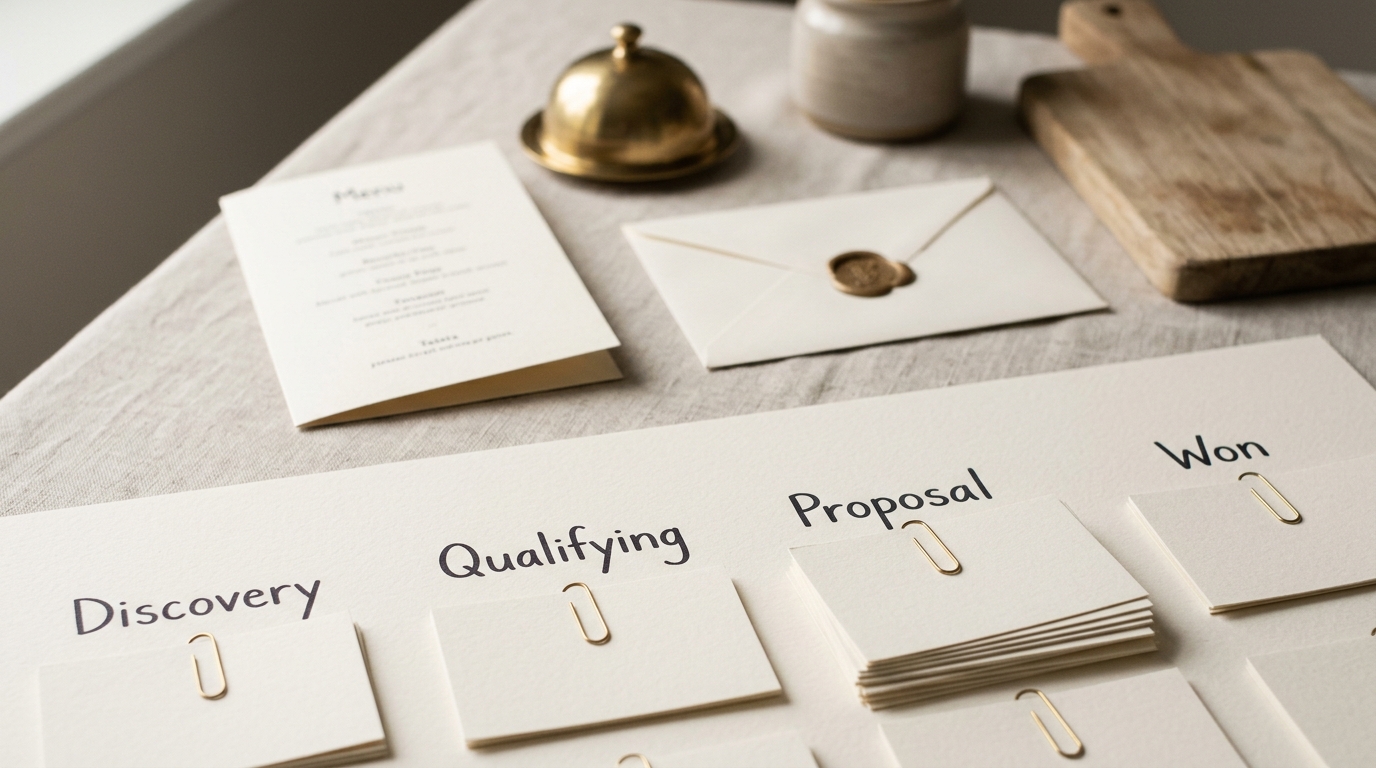
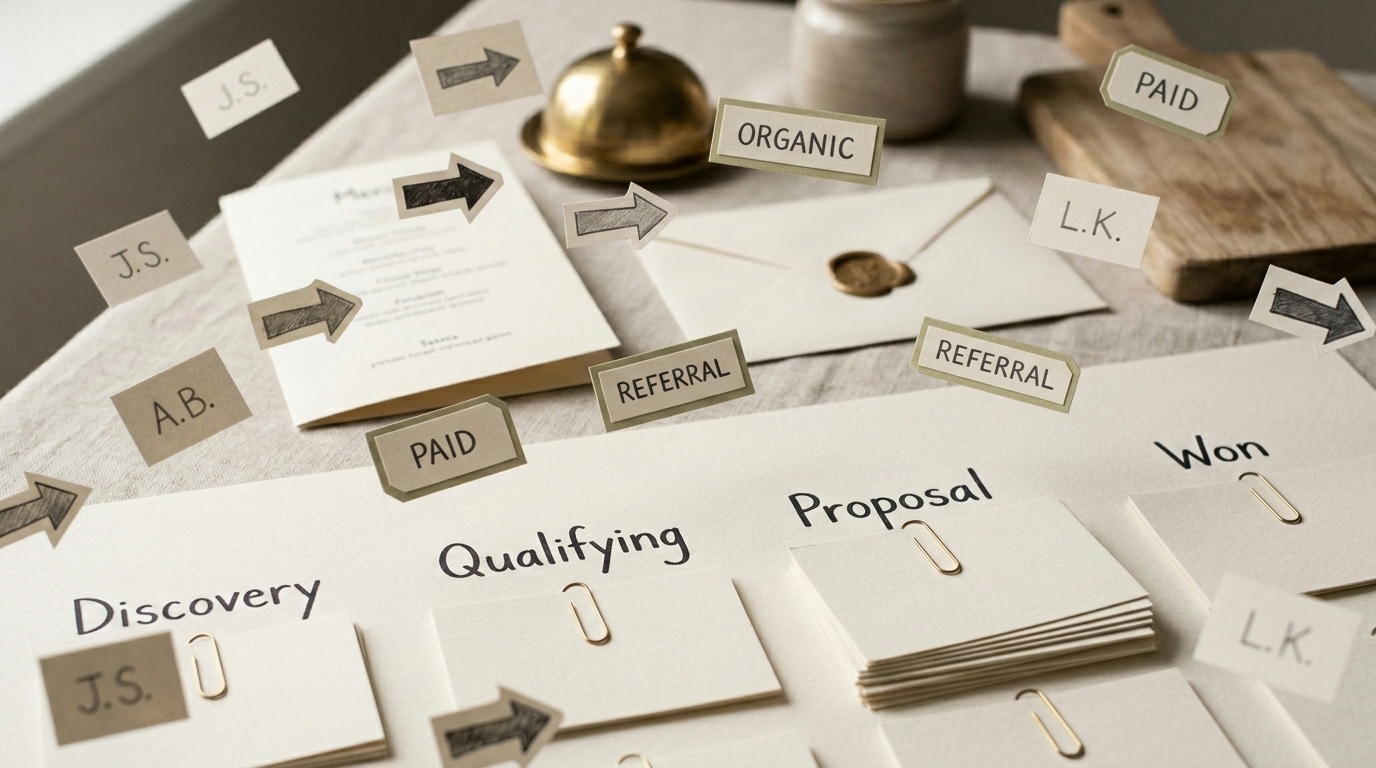
Funnel architecture from impression to closed-won
Tuned to Hospitality, Food & Drink — the version we ship to operators in this vertical.
Server-side tracking spec and CRM pipeline definition
Tuned to Hospitality, Food & Drink — the version we ship to operators in this vertical.
Lead-magnet copy and landing-page brief
Tuned to Hospitality, Food & Drink — the version we ship to operators in this vertical.
Speed-to-lead automation rules (sub-5-minute response)
Tuned to Hospitality, Food & Drink — the version we ship to operators in this vertical.
Weekly volume + qualification dashboard
Tuned to Hospitality, Food & Drink — the version we ship to operators in this vertical.
Quarterly channel-mix review against actual revenue contribution
Tuned to Hospitality, Food & Drink — the version we ship to operators in this vertical.
SectionThe honest reframe most lead-gen agencies won't tell you
Generic lead-gen agencies sell restaurants, hotels, gastropubs and catering operators a Facebook lead-form campaign with a "20% off your first visit" offer and a promise to "fill the bookings diary." They ignore the only thing that matters in this category: direct-booking economics. Every cover routed through Booking.com costs you 15-20% commission. Every cover routed through OpenTable costs £0.50-£2 per seated guest. Every cover routed through your own form costs you nothing in commission and gives you a clean email + SMS opt-in for re-marketing.
A hospitality lead funnel that doesn't close the gap between OTA economics and direct-booking economics is shipping leads that pay your competitors. A funnel that treats every enquiry as "table for two next Saturday" misses the highest-margin revenue line in the building — private hire, weddings, Christmas parties, corporate dinners, whole-venue buyouts. And a hotel funnel that doesn't route by available-date + ADR (average daily rate) is showing the wrong room at the wrong price to the wrong guest.
This playbook fixes the structure. Direct-booking economics is the conversion lever. Private-hire is the margin line. ADR-aware routing is the multiplier. Read it, run it yourself, or have us ship it on retainer — the canon is the same.
SectionThe eight-point audit we run on day one
Score your own funnel red / amber / green this week. Three or more reds means the foundation is broken — fix that before any new spend.
- Direct-booking incentive vs OTA-commission economics — Every direct booking saves you 15-20% on Booking.com or 0.50-£2 per cover on OpenTable. Most operators don't quantify the saving on the booking page itself. Show it: "Book direct and we'll hold your favourite table" beats "20% off." The savings model gates how aggressive you can be on direct-booking incentives without margin damage.
- Private-hire / events / catering separate lead funnel — Whole-venue buyouts, weddings, Christmas parties, corporate dinners and outside catering carry 30-50% gross margins versus 12-18% on standard covers. Mixing them with table-booking enquiries drops them into the wrong inbox and loses the high-value lead. A separate qualified form, a named events manager and a 2-hour callback SLA is the canon.
- Hotel availability + ADR-aware routing — Room enquiries should route by available-date + room-type + rate-segment. Showing a £95 room to a guest searching a £180 weekend slot loses the booking; showing the £180 room when only the £95 is available wastes the surveyor call. Real-time PMS feed (Mews, Cloudbeds, Little Hotelier) into the lead form is non-negotiable above 20 keys.
- Loyalty / repeat-visit capture (email + SMS opt-in at booking) — Hospitality is a repeat-visit category. A first-visit guest with no email or SMS opt-in is a one-shot transaction; with consent, they're worth 3-7× over 24 months. Capture at booking, confirm at arrival, segment by visit frequency and average spend. Targeted SMS to lapsed-90-day guests typically lifts return-visit rate 8-15%.
- Review-request automation post-visit — A one-tap link to your Google Business Profile review URL, sent by SMS 18-24 hours after the visit. Compounds local-pack ranking, raises FSA-rating-adjacent trust signals, and lifts buyer-side conversion at the booking moment. Target 8-15 reviews/month, 80%+ owner response rate.
- Pre-arrival SMS upsell (rooms / dinner / spa) — Hotels: SMS 48-72 hours pre-arrival with a one-tap link to upgrade the room, book the restaurant table, add a spa treatment or pre-order champagne. Conversion 12-22% on well-targeted upsells. The single highest-margin add-on revenue line a small hotel will ever build.
- Offline conversion tracking enquiry → booking → covers → revenue per cover — Without this, paid platforms optimise toward the cheapest "form fill" (often a quote-shopper). Send the actual booking value + covers count back via Google Ads offline conversions or Meta CAPI. The algorithm starts bidding on real revenue per cover within 30 days, not form-fillers.
- Allergen-disclosure compliance on enquiry forms (Natasha's Law) — Pre-order, catering and private-hire enquiry forms that capture menu choices must surface allergen information at the point of enquiry, not on arrival. The Food Information (Amendment) (England) Regulations 2019 — known as Natasha's Law — extend to PPDS (Prepacked for Direct Sale) and to written communication ahead of service. Your enquiry form is written communication. Get this wrong on a corporate booking with a known allergy and the FSA-adjacent risk is real.
Three or more reds — fix the foundation before commissioning new ad spend.
SectionSix productised deliverables we ship per cycle
On a Foundation, Compound or Architect retainer, the same six outputs land in your portal each cycle. Industry-tuned, fixed scope, dated.
Direct-booking incentive + OTA-economics dashboard. A live model that quantifies the cost of every cover routed through Booking.com, OpenTable, ResDiary or your direct booking engine — by channel, by month, by venue. The booking page presents a direct-booking incentive priced against the OTA commission saved, calibrated so margin contribution stays neutral or positive versus the OTA-routed equivalent. Channel-mix shift typically moves 10-25 percentage points toward direct within 90 days. Time to first signal: 21 days.
Private-hire / events lead funnel. A separate enquiry form for whole-venue buyouts, weddings, corporate dinners and external catering, with qualified fields (date flexibility, headcount, budget band, dietary requirements, dry-hire vs catered), a named events manager assigned by booking type, and a 2-hour callback SLA during business hours. Calendly or SimplyBook integration to the events manager's diary. Quote-cycle nurture sequence on a 7-21 day arc. The single highest-margin lead funnel we build for the category.
Hotel availability + ADR-aware routing. PMS feed (Mews, Cloudbeds, Little Hotelier or equivalent) wired to the booking-engine + enquiry form so the right room at the right rate appears on the right date. Routing logic by rate segment (best flexible, advance purchase, package). Above 20 keys this is non-negotiable; below 20 keys a manually-maintained rate calendar with weekly refresh is acceptable. Direct-booking conversion typically lifts 18-30% within 60 days.
Loyalty / repeat-visit capture flow. Email + SMS opt-in at booking, confirmed at arrival, segmented by visit frequency, average spend and lifecycle stage. Three lifecycle automations ship by default: first-visit thank-you (24h), birthday/anniversary trigger (annual), lapsed-90-day re-engagement. Targeted SMS to lapsed guests lifts return-visit rate 8-15%. Email lifetime-value per opted-in guest typically £80-£250 over 24 months. Time to first signal: 14 days.
Pre-arrival SMS upsell. For hotels, B&Bs and venue-with-rooms operators: a 48-72 hour pre-arrival SMS with one-tap upgrade links — room upgrade, dining table, spa treatment, champagne pre-order, late checkout. Built on Twilio or equivalent + your booking engine API. Upsell conversion 12-22% on well-targeted offers. Highest-margin add-on revenue line a small hotel will build.
Offline conversion tracking booking → revenue per cover. GA4 + sGTM container shipping the actual booking value, covers count and channel back to Google Ads, Meta CAPI and TikTok Events API. The algorithm bids on real revenue per cover, not form-fills. Junk-enquiry rate drops 30-50% within 60 days as the algorithm learns. The reporting layer your finance director and your head chef both read. Time to first signal: same week on tracking, 30 days on optimisation.
SectionWhat to do this week
Three actions, ranked by leverage. Same first three steps we ship in week one of a Foundation retainer for a hospitality operator.
- Quantify the cost of OTA dependency. Owner: founder or finance manager. Time: 1 hour. Pull the last 90 days of bookings by channel. Multiply Booking.com volume by the commission rate, OpenTable cover count by your per-cover charge. The number on the page is your annualised direct-booking opportunity. Most operators discover the figure is mid-five-figures or higher.
- Audit the enquiry routing for private-hire / events. Owner: founder or events manager. Time: 30 minutes. Submit a test private-hire enquiry on your own form. Time how long until the events manager calls back. If it's over 2 hours, you are losing high-margin revenue every week. Add: separate form, separate inbox, named owner, 2-hour SLA.
- Decide DIY, DWY or DFY for the next 90 days. Owner: founder. See the three ways.
SectionFive questions restaurant / hotel / pub operators ask us about lead-gen
What's a realistic CPL for direct-booking versus OTA-routed bookings? Direct-booking acquisition cost via Meta or Google Search typically runs £4-£12 per booking enquiry for restaurants and gastropubs, £15-£45 for hotels (variance driven by ADR), and £30-£90 for private-hire enquiries. Compare against the commission saved: a £180 hotel booking on Booking.com costs you ~£32 in commission; a £4-£15 direct-booking acquisition cost is a margin gain of £17-£28 per stay. The maths almost always favours direct-booking ad spend over OTA dependency above £6 per direct enquiry.
OpenTable's per-cover charge — when is it worth it? OpenTable charges £0.50-£2 per seated cover on its standard tier and ~£200-£250/month on its premium tiers. On a 30-cover service running twice nightly, the per-cover model can run £900-£3,600/month before you've paid for marketing. The break-even versus a direct-booking ResDiary or SevenRooms install is typically 2,000-3,500 covers/month. Above that volume, OpenTable's lead-generation value (network bookings) needs to be priced against its true commission cost. Below that volume, ResDiary, SevenRooms or the booking engine native to your POS is almost always cheaper.
What's the margin contribution of private-hire versus standard service? Private-hire and events typically run 30-50% gross margin (controlled headcount, single-sitting kitchen, pre-paid deposits) versus 12-18% on standard à la carte covers. A 40-head private dinner at £75/head is £3,000 gross with ~£1,200-£1,500 contribution; the equivalent à la carte service is ~£500-£600. Private-hire is the single highest-margin line you can prioritise without operational change.
Loyalty programme ROI — is it worth the build? A captured email + SMS guest in the hospitality category typically returns £80-£250 in attributable revenue over 24 months on a well-run lifecycle programme — birthday triggers, lapsed-90-day re-engagement, seasonal menu launches. With a 60-70% opt-in rate at booking, a 50-cover-per-service operator builds a list of 15,000-22,000 opted-in guests within 18 months. Email + SMS-attributable revenue typically reaches 8-18% of total revenue by year two. The build cost (template, segmentation, three lifecycle automations) is recovered inside the first quarter on most operators we onboard.
Can we run this ourselves with the playbook + £750 audit? Yes — most of the audit-and-fix list above is achievable in-house if you have a marketing manager + a developer half-week. The £750 audit gets you a written red / amber / green scoring + named-owner / dated next steps. If you sign for DWY or DFY within 30 days, the audit fee credits against the first cycle.
SectionWhere to go from here
If you want this shipped end-to-end on a productised retainer, book a 30-minute discovery call. Tailored proposal in writing within two business days.
If you'd rather have a senior practitioner reviewing your team's work each week, the coaching plans start at £750/month with rolling cycles and walk-away rights. If you have a hard deadline (a menu rebrand, a pre-summer-season launch, a Christmas-bookings push, a hotel rebranding), the two-week embedded sprint lands a senior practitioner inside your tools for ten working days at £3,000 fixed for menu rebrands or pre-summer-season launches.
Or run it yourself. Eight-point audit + one deliverable a month + twice-quarterly office hours.
Get Lead Generation for Hospitality, Food & Drink.
A focused, no-fluff playbook covering the audit, the deliverables, the success signals and the cadence we use when we run this combination for clients. Hospitality, Food & Drink-specific from the first page to the last.
No spam. One playbook, one follow-up email a week later asking what landed and what didn’t. Unsubscribe in one click.
Where the playbook ends and the engagement begins.
The framework, free
- The eight-point audit baseline so you can score your own site this week
- The six productised deliverables we ship per cycle, named and explained
- The 30/60/90 fix roadmap so you can plan internal capacity
- The three-way model (DIY / DWY / DFY) and price bands
- The success metrics we track and the time-to-signal canon
- The industry-specific regulators, sub-verticals and trust signals
What requires the call
- Named-client case studies with revenue numbers (NDA-protected)
- Our internal tooling stack and platform vendors (trade-secret)
- The proprietary scoring rubric we use to triage problems
- Specific commercial terms beyond published price bands
- Direct introductions to our partner network
- The post-engagement playbook revisions we ship per cycle
Adjacent combinations operators in this vertical also read.
Lead Generation for Combat Sports & Fitness
A focused playbook for Combat Sports & Fitness operators running Lead Generation.
Open the playbook → PLAYBOOKLead Generation for Events & Entertainment
A focused playbook for Events & Entertainment operators running Lead Generation.
Open the playbook → PLAYBOOKContent & Editorial for Hospitality, Food & Drink
A focused playbook for Hospitality, Food & Drink operators running Content & Editorial.
Open the playbook → PLAYBOOKEmail Marketing for Hospitality, Food & Drink
A focused playbook for Hospitality, Food & Drink operators running Email Marketing.
Open the playbook →Start your Lead Generation for Hospitality, Food & Drink programme.
Thirty-minute discovery call, free, no commitment. We’ll send a tailored band before the call and a written proposal within two business days.